Get Full Government Meeting Transcripts, Videos, & Alerts Forever!
Get email alerts on the Tax Policy topic
No spam. Unsubscribe anytime.
Millis approves limited senior exemption for future school building overrides after contested debate
Summary
Town Meeting approved a narrowly drawn exemption for low‑income seniors from taxes tied specifically to future school-building override costs, after extended public debate and a split finance-committee recommendation.
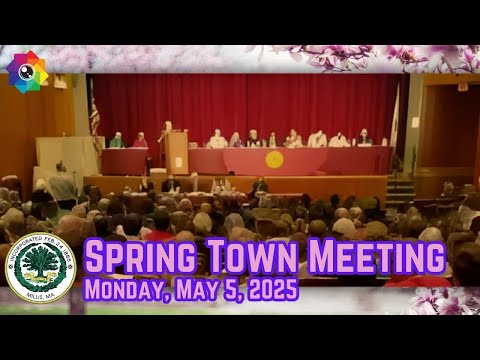
Millis voters approved an article creating a narrowly targeted property-tax exemption for qualifying long-term, low‑income senior homeowners specifically related to any future school-building override. The measure drew lengthy debate at Town Meeting about financial impact, legal precedent and fairness.
The article was modeled on a special act used by a neighboring community; select-board representatives said the town copied and adapted the language used by that town. Finance committee members presented both a majority and a minority report to the meeting. The finance committee’s majority recommended dismissal, citing fiscal precedent and the potential for an open-ended long-term cost to the town; four members filed a minority report supporting the article as a way to protect vulnerable homeowners who qualify for the state senior circuit-breaker exemption and have long residency in Millis.
Supporters said the exemption would help an estimated small handful of homeowners (the board’s rough estimate during discussion was on the order of 100 residents who meet the circuit-breaker and residency tests) stay in town if a school override advances. Opponents raised concerns that the exemption sets a precedent for carving out budget line items and could be exploited unless carefully limited.
After procedural motions and extended floor discussion, the meeting first considered a motion "not to approve" (a procedural motion equivalent to dismissal). That motion did not end consideration; a later affirmative motion to approve the article as written was made and passed by voice vote. The floor vote approving the article was carried after the meeting voted to proceed, and the article survived the procedural hurdles. Voters were told the measure will require additional steps (possible special‑act approvals and administrative rules) to implement and that the town assessor and board of assessors would play a role in certifying eligibility each year.
The final motion approved the article as drafted at Town Meeting. Town counsel and staff said the text is patterned on an existing special act used in another municipality and is intended to apply only to narrowly defined school-override debt, with qualifying criteria that include age, income limits, years of residency and approval by the board of assessors.
Because the article is narrowly targeted to future school-building overrides, it does not affect general town revenue or other non-school-related overrides. The finance committee had split recommendations; the motion that approved the article followed on-floor debate and a subsequent affirmative motion to pass the article.