Get Full Government Meeting Transcripts, Videos, & Alerts Forever!
Get email alerts on the Municipal Finance topic
No spam. Unsubscribe anytime.
Lakeville faces $414,000 shortfall after state cuts to smart-growth aid; town freezes nonessential spending
Summary
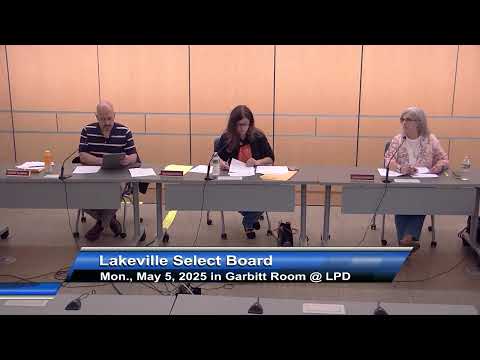
Town Administrator Andrew told the Select Board the state reduced smart-growth aid by $414,000 covering both fiscal 2025 and 2026; he ordered a freeze on nonessential spending while awaiting possible state action.
Town Administrator Andrew said the Town of Lakeville is confronting an immediate budget shortfall after the state reduced smart-growth aid by $414,000, and that the reduction applies to both the current fiscal year and the coming fiscal year.
"I didn't quite realize this, but I've since got it confirmed that that $414,000 in reduced state, smart growth aid is not just fiscal 26, it's also fiscal 25," Andrew told the Select Board during his report. He said he had spoken with Senator Rodericks, who "said he's gonna try to put it in the senate budget for that to come back," but Andrew cautioned that any legislative fix would not help this coming fiscal year.
The reduction follows earlier expectations that the town would receive larger aid; the town had previously budgeted $676,000 for the line before the cherry sheet notification revised the number. Andrew said the town currently shows $246,000 in the line for fiscal 2026 but that figure is uncertain. To limit exposure, he said he is instituting a freeze on nonessential spending effective immediately.
Why it matters: the smart-growth aid reduction creates an unplanned gap in operating resources that the town must close this fiscal year or offset through cuts, transfers or one-time revenue. Select Board members repeatedly asked for clarification on whether the money could be restored and how large the hole would be; board members and staff said they were continuing to pursue legislative relief.
Details and context: Andrew said the town had acted in reliance on Chapter 40R and other state programs when planning housing and budget commitments. He said the earlier cherry-sheet projection that the town used to finalize last year's budget proved to be optimistic.
Board discussion and next steps: Select Board members asked whether the state would restore the aid this year; Andrew said there was no guarantee. He repeated that the town's current budget assumptions include $246,000 for fiscal 2026 but that figure could be reduced if more towns enter the program. The board did not vote on additional measures beyond the spending freeze; members asked that staff return with options and updates as the town learns more about the Legislature's actions.
The town will continue to monitor state budget actions, follow up with the senator's office and bring recommendations to the board for how to close the current-year gap if the aid is not restored.