Get Full Government Meeting Transcripts, Videos, & Alerts Forever!
Get email alerts on the Budget topic
No spam. Unsubscribe anytime.
Millis approves $47.27 million FY2026 budget after heated debate over new human-resources positions
Summary
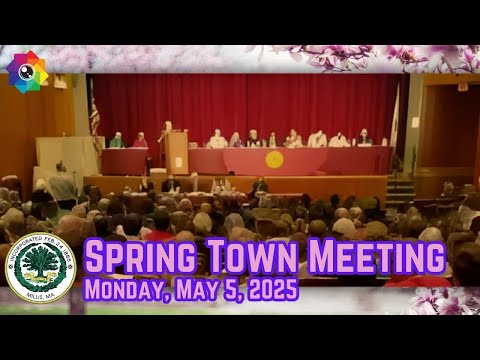
Town Meeting approved a $47,269,970.30 fiscal 2026 operating budget after residents debated a newly proposed human-resources unit and competing requests to shift that funding into police and fire staffing.
Millis voters approved the town of Millis’ fiscal year 2026 operating budget, $47,269,970.30, after more than an hour of discussion that focused on a newly proposed human-resources department and competing calls to reallocate that money into public safety positions.
The budget, presented by the finance committee and moved at the meeting by Peter Underhill, passed at a voice vote after floor debate. John Lauren, chair of the finance committee, told voters the FY2026 budget represents a 6% increase over FY2025 and is balanced. "The town has a balanced budget," Lauren said during his presentation, outlining new hires and an organizational change that would create a human-resources function for municipal and school employees.
The most contested element of the budget was a newly created human-resources line item of $189,500. Resident Cathy McGinnis moved an amendment to remove that line and instead add $98,000 to the police salaries line (to fund one new officer), $79,000 to the fire/rescue salaries line (to fund one new firefighter-paramedic), and return $12,500 to the stabilization fund. McGinnis framed her amendment around public-safety staffing levels and rising call volumes: "A whopping 67% increase in logged calls and no increase in staffing," she said, urging voters to prioritize police and fire positions over the new HR unit.
Town officials and other residents pushed back. Select board members and the town administrator described the HR package as a cost-saving and risk-reduction measure that, they said, would pay for itself by reducing health-insurance costs, improving benefits administration and avoiding litigation costs. The town administrator explained how the $189,500 breaks down: an estimated $100,000 for a human-resources director, a roughly $6,000–$8,000 upgrade to an existing benefits administrator, approximately $60,000 for a new school benefits coordinator, and about $20,000 for part-time administrative support. The town administrator argued a dedicated HR team would be able to research insurance and staffing models and find savings that could offset the new positions' costs.
Supporters of the HR plan emphasized the size of Millis’ workforce and regulatory complexity. "We're a $47 million town with 400 unionized employees and no full-time HR staff," Selectman Schultz told the meeting, arguing the town lacks the capacity to handle benefit administration and labor compliance without a full-time HR function.
After extended discussion and procedural confusion on the floor, the amendment offered by McGinnis was put to a vote and—per the moderator’s announcement—was carried. The main budget motion then proceeded to a final up-or-down voice vote and was approved by the meeting as presented, $47,269,970.30.
What voters approved is the operating-level appropriation for FY2026; the budget includes modest staff additions (one DPW position, one fire position) and the changes described above. The finance committee recommended approval 8–1. The moderator reminded voters the town budget line items and technical details remain subject to the limitations and accounting in the warrant book and supporting documents.
The vote resolves the town’s principal annual fiscal decision for the coming year. Debate tonight showed the competing priorities Millis residents weigh: bolstering emergency-services headcount now versus investing in an in-house HR capacity municipal leaders say will reduce long-term costs and risks.