Get Full Government Meeting Transcripts, Videos, & Alerts Forever!
Get email alerts on the Workforce Development topic
No spam. Unsubscribe anytime.
Cambridge holds public hearing on jobs-training trust as partners outline existing workforce programs
Summary
Cambridge City Council’s Economic Development and University Relations Committee held a public hearing where city staff, the Cambridge Public Schools and local training providers described existing workforce programs and discussed whether a proposed Cambridge Jobs Training Trust — modeled on Somerville’s and Boston’s linkage funds — should be created to fill gaps such as participant stipends, transportation and outreach.
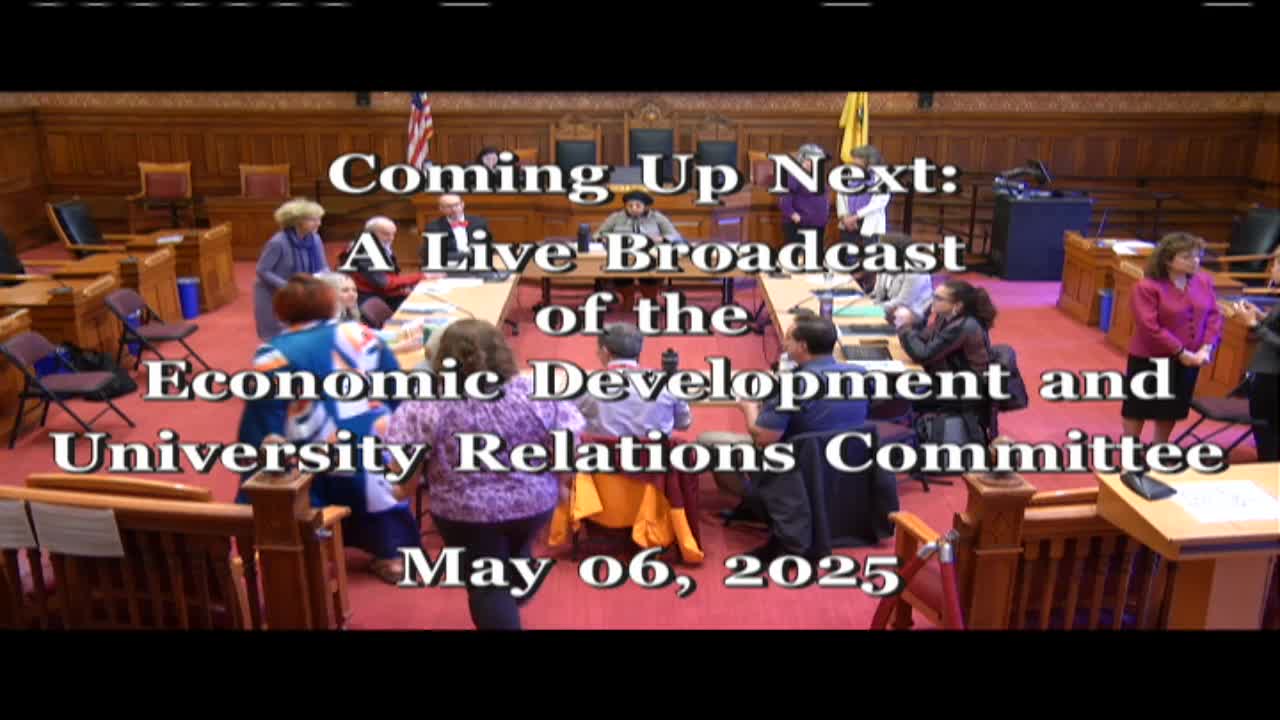
Cambridge City Council’s Economic Development and University Relations Committee convened a public hearing on a possible Cambridge Jobs Training Trust and on the city’s existing workforce-development programs, hearing hour-long presentations from city staff, the public schools and local nonprofit and institutional partners and two public commenters in favor of establishing a trust.
The hearing, led by Vice Mayor Alanna McGovern (committee chair), focused on how a Jobs Training Trust — a model that directs linkage fees or similar revenue to workforce training — might be structured and how it would add to services currently provided by the city, Cambridge Public Schools and community partners.
Why it matters: Committee members said the city needs to understand what it already funds and where gaps remain before deciding whether to add a new funding mechanism tied to development. Several presenters and public commenters described how Somerville’s and Boston’s linkage funds have been used to underwrite participant stipends, build pipelines and expand recruitment into training programs — uses councilors said Cambridge might want to replicate if the city moves forward.
City and school overview
Sue Walsh, assistant director for adult and family services, told the committee the presentation aimed to describe the “ecosystem” of services that supports low-income residents, residents of color and people disconnected from the labor market. The city’s levers, she said, include direct hiring, direct programs, partner convening and contracting or referral to community-based training providers.
David Murphy, interim superintendent of Cambridge Public Schools, said the district embeds career and college pathways from early childhood through high school and noted Rindge (RSTA) technical programs and cooperative education as key channels for students to connect to careers.
Programs and partners: what the committee heard
- Office of Workforce Development and Community Learning Center: Susan Mintz and other DHSP staff described an Office of Workforce Development that serves nearly 2,000 residents annually and a Community Learning Center (CLC) that served about 1,300 adults between July 2023 and December 2024. The CLC runs certified nursing assistant (CNA) and early childhood training programs and provides pre-CNA and career-connection preparatory services; staff said 601 students graduated from CNA tracks in the cited period and that the CLC supported 110 adults to enroll in and graduate from training programs during the reporting window. Assistant City Manager Alan Semenoff estimated combined workforce-related spending in the city’s operating budgets and contracted workforce services at roughly $4.2 million (Office of Workforce Development) plus about $3 million associated with the Community Learning Center’s education/ training mission (figures presented as city estimates).
- Rindge (RSTA) Career & Technical Education: Roy Doucette, RSTA CTE coordinator, described the exploratory model for ninth graders, the 12 industry-aligned programs students sample, and the plan for students to enter a selected program in 10th grade and continue through 12th grade. RSTA staff said they are working to increase seats in exploratory and in-demand majors.
- Cambridge Housing Authority (CHA): CHA staff described a long-running youth workforce program beginning in sixth grade and continuing through college and early career stages. CHA said about two-thirds of participants no longer live in public housing six years after program participation and described a new property-management certificate (partnered with Wentworth Institute of Technology) with a paid internship component.
- Nonprofit and institutional partners: Representatives from Just-A-Start, Perschola/Per Scholas (referred to in testimony as Perscolis Greater Boston), MIT’s Job Connector, Apprenti, Green Cambridge and other providers described their training models, outcomes and how linkage-like funds have been used in Somerville and Boston to pay stipends, support recruitment and create residency-based pipelines. Examples given: - Just-A-Start (biotech and IT tracks, youthbuild/construction tracks): high graduation and industry-placement rates; a new on-site lab to expand capacity. - MIT Job Connector: set up after a zoning condition tied to the Volpe redevelopment; has served roughly 900 Cambridge residents since 2019 and runs an Introduction to Construction course and administrative-assistant training; summer internships described as gateway experiences to medical careers. - Perschola/Per Scholas: tuition-free boot-camp model (13–15 weeks) with learner supports (social workers, financial coaches), employer partnerships and alumni supports that show large wage gains for graduates. - Apprenti (public commenter): described apprenticeship outcomes statewide and urged a Jobs Trust to underwrite high-quality technical training and reduce the average student share of training costs. - Green Cambridge (public commenter): described environmental workforce pipelines (urban forestry, ecological restoration) as both climate and workforce investment opportunities.
How a Jobs Training Trust might fit and legal steps discussed
Speakers described several potential roles for a Cambridge Jobs Training Trust: to fund stipends and transportation so working residents can enroll in training; to underwrite paid training slots; to fund intermediaries or coordinators who build and sustain regional pipelines; and to fund residency-focused outreach (staff said Somerville and Boston linkage funds have been used in these ways).
Assistant City Manager Alan Semenoff and others said some training in the region is already free (career center programs funded by federal workforce dollars and WIOA), but other high-value technical programs require paid seats or wraparound supports that a trust could subsidize. Perschola and Just-A-Start presenters said residency requirements tied to linkage funds create incentives and measurement regimes that help drive outreach and performance.
Legal and procedural status
Assistant City Solicitor reported that a Cambridge "home rule" petition to authorize a jobs-creation/retention trust has been filed with the state legislature and is still pending there; if the Legislature approves enabling special legislation, the city would follow a local ordinance process (declaration of trust, board appointments and zoning amendments) similar to the Affordable Housing Trust’s establishment.
Council questions and concerns
Several council members asked for a clearer accounting of current city spending on workforce programs before committing to a new fee mechanism tied to development. Councilor Toner asked for a city-wide tally of existing inputs (how much the city already spends on school and city-run programs and how much goes to nonprofit partners); staff pointed to appendices in the packet and offered to provide more detailed breakdowns.
Councilors also raised concerns about potential economic effects of a development-linked fee. Toner and others asked whether adding a linkage fee would make Cambridge less competitive for new development. Staff said those are policy trade-offs the council would need to weigh.
Public comment
Two public commenters spoke in support of creating a jobs trust: Dan Weigel of Apprenti urged the council to create the Cambridge Jobs Trust to help underwrite technical training and apprenticeships, and Steven Nutter of Green Cambridge endorsed dedicated funding for environmental and climate-related workforce pathways.
Outcome and next steps
No ordinance or trust was adopted at the hearing. The assistant city solicitor said the city is awaiting action by the state legislature on the home-rule petition. Councilors asked staff for more financial detail on current spending, and multiple presenters urged that any new funding vehicle focus on stipends, transportation, recruitment and on paying for high-quality technical training or intermediaries that manage pipelines.
A procedural motion to adjourn carried by roll call vote at the end of the meeting.
Ending note: Presenters and councilors repeatedly stressed the long-term nature of workforce development: several programs described multi-year engagement models that start in middle school and continue through postsecondary training and early careers, and multiple speakers said a Jobs Training Trust would be most useful if it funded the supports that allow people to participate in training (stipends, transportation, outreach) and paid staff to coordinate cross-agency pipelines.