Get Full Government Meeting Transcripts, Videos, & Alerts Forever!
Get email alerts on the Building Code Adoption topic
No spam. Unsubscribe anytime.
San Miguel County staff urge phased approach to adopting 2024 building, energy and wildfire codes
Summary
San Miguel County staff told the Board of Review they plan to move to the 2024 International Code Council cycle but recommended a delayed, phased implementation to accommodate state energy and wildfire rules, staffing limits and contractor readiness.
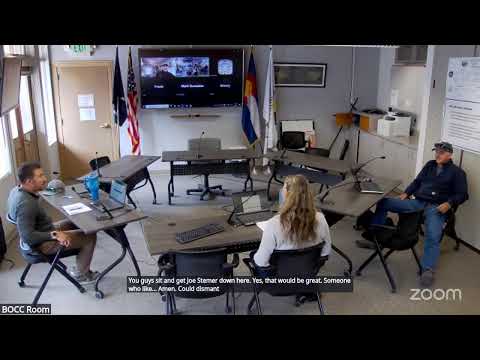
San Miguel County staff told the county's Board of Review on May 6 that they intend to adopt the 2024 International Code Council (ICC) building code cycle but want to phase and delay implementation to give designers and contractors time to adapt.
The county's discussion centered on three overlapping items: the 2024 ICC code cycle, state-developed "model electric-ready and low-energy/low-carbon" code provisions (including energy-code changes tied to the International Energy Conservation Code, or IECC), and the Colorado wildfire resiliency code. Matt Gonzales, a San Miguel County staff member who led the presentation, said he originally planned to adopt the 2024 cycle this fall but now expects adoption to slip into early next year to allow more outreach and to avoid forcing projects already in design to rework plans.
Why it matters: new code cycles and state-mandated energy and wildfire rules change requirements for insulation, mechanical systems, rooftop solar readiness and site hardening. Contractors and designers told the board those changes can affect construction timelines and budgets for projects that are already months or years into design.
Gonzales explained the legal constraints and timing. Reading from state guidance, he said jurisdictions that adopt or update a building code between July 2023 and June 2026 must adopt at least the 2021 IECC along with the state's model electric-ready and solar-ready code: "Cities and counties with building codes must adopt the 2021 IECC along with the model electric-ready and solar-ready code when adopting or updating any building code between July of 2023 and June of 2026." He added that the county is currently on the 2018 code cycle and is aiming to skip the 2021 ICC cycle and move directly to the 2024 cycle.
Board members and several contractors at the meeting urged caution. Emery Smith, a Board of Review member, and other attendees said a six-month buffer between adoption and the code's effective date would be reasonable; several participants urged even slower implementation for projects deep in design. One contractor described the 2021 IECC as "atrocious" for the local climate and said the 2024 code appears more practical with more compliance pathways, but others said the new state model rules are technical and will require engineering input.
Staffing and process constraints were a recurring theme. Gonzales noted the county's lead inspector had recently left for another job, and permit staff turnover and a scheduled maternity leave for a permit technician mean inspection capacity will be constrained this year. He said those staffing limits are part of the reason the county is considering a later adoption timeline.
Wildfire code and maps: Gonzales outlined the state wildfire-resiliency effort, which assigns statewide hazard zones (zone 1, 2 and 3) and sets structure- and site-hardening requirements in the higher-risk zones. He said the state board created to develop the wildfire code included insurance and fire officials and that the state's map is not parcel-specific, which prompted questions from attendees about whether the map would match insurers' risk ratings. Gonzales said the county can "ground-truth" or create its own map and that the draft code contains pathways for alternative compliance and approvals by the building official.
Outreach and contractor registration: staff asked what communication methods would work for local designers and contractors. Attendees recommended short, targeted emails and periodic in-person or hybrid training sessions (some suggested quarterly briefings or informal "beer and building science" style events). Several speakers supported some form of contractor registration or minimum local credentials to filter out inexperienced contractors; others cautioned about details and reciprocity with neighboring jurisdictions.
Next steps: Gonzales said the county will monitor pending state legislation that could extend adoption deadlines for the wildfire code and will time county code adoption to minimize cascading changes (for example, avoiding adopting one code now and being forced to adopt a different state energy code immediately afterwards). He told the board he plans to return with proposed outreach events and to reconvene the Board of Review after the state publishes final rules and the July state deadline has passed.
Votes at a glance - Approval of minutes (Jan. 8, 2024): motion to approve made and seconded; approved by voice vote. (Record: motion passed, no roll-call tally supplied in the transcript.) - Motion to adjourn: approved by voice vote.
Discussion vs. decision - Discussion: detailed, substantive conversation on the 2024 ICC cycle, the state's model electric-ready/low-carbon provisions and the draft wildfire-resiliency code; contractor education and registration; staffing impacts on inspections. - Direction/assignments: staff to monitor state rulemaking and legislation, design outreach events, and return to the Board of Review after the July state deadline with updates and draft proposals. - Formal action: the only formal motions recorded in the transcript were procedural (approval of minutes and adjournment); no county code resolution was adopted at this meeting.
Sources and attributions Quotes and information in this article come from San Miguel County Board of Review meeting remarks on May 6, 2024, including presentations and comments by Matt Gonzales (San Miguel County staff), Ken Watt (Board chair), Lily Briggs (San Miguel County staff), Maura Fahey (San Miguel County attorney) and Board members Emery Smith, Frank Henson and John Foote. Meeting discussion and state-deadline references were read aloud by Gonzales during the meeting.