Get Full Government Meeting Transcripts, Videos, & Alerts Forever!
Get email alerts on the Gaza Humanitarian Crisis topic
No spam. Unsubscribe anytime.
U.N. warns Gaza humanitarian operations are collapsing as blockade, fuel shortages persist
Summary
The U.N. Office for the Coordination of Humanitarian Affairs says Gaza is facing a deepening catastrophe after three months of effective blockade, dwindling fuel, closed clinics and failing public services; the U.N. urges immediate, scaled humanitarian access.
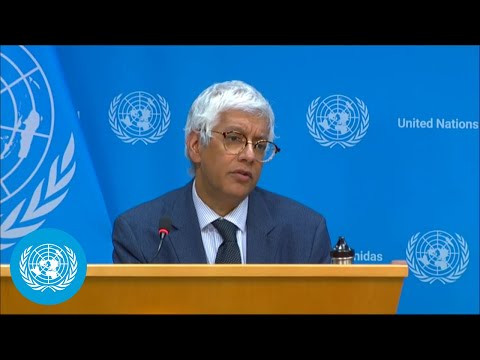
Turning to Gaza, the United Nations Office for the Coordination of Humanitarian Affairs (OCHA) warned that a deepening humanitarian catastrophe is unfolding after three months of what it described as a total blockade on humanitarian and commercial supplies.
OCHA told reporters that “under international humanitarian law, civilians must be protected, and their essential needs, including food, shelter, water, and health care, must be met wherever they are in Gaza and whether they move or stay.” The office said yesterday the Palestine Red Crescent Society reported that all emergency and primary health-care centres in Rafah are now out of service, and that across Gaza 13 of 29 Red Crescent clinics have closed or are barely functional.
“The remaining clinics are barely functional and face severe shortages,” the U.N. spokesperson said, adding that without fuel “health, water, sanitation, and communication services are at risk of complete collapse.” He said a small quantity of fuel was retrieved from a station in Deir El Bala with Israeli facilitation and would be distributed to desalination plants, but that “Israeli authorities continue to routinely deny our access to larger urgently needed fuel reserves in areas such as Rafah.”
The U.N. spokesperson said humanitarian partners have been distributing hot meals, water, shelter materials, hygiene kits and providing health and nutrition consultations, but that “time is running out” and that operations are “on the verge of shutting down.” He said some bakeries and hospitals already have closed or become nonfunctional because of lack of fuel, food and undamaged facilities.
Separately, the U.N. warned of worsening conditions in the West Bank, including demolition actions in Hebron governorate and Tulkarm that displaced families. The U.N. said demolitions in a hamlet in Hebron affected most structures there and marked the largest demolition in that community since February; in Tulkarm, the U.N. said multiple homes were demolished or slated for demolition, leaving dozens of families at immediate risk of displacement.
Why it matters: The U.N. says denial of sustained fuel and supplies threatens basic services across Gaza and could precipitate the collapse of lifesaving humanitarian operations. The situation also raises urgent protection concerns for civilians facing displacement in Gaza and the occupied West Bank.
The U.N. continues to call for sustained humanitarian access, protection of civilians and the immediate, unconditional release of hostages, saying a return to dialogue is the only sustainable path to reduce civilian suffering.