Get Full Government Meeting Transcripts, Videos, & Alerts Forever!
Get email alerts on the Transgender Rights topic
No spam. Unsubscribe anytime.
Senate approves 'Kelly Loving Act' to expand legal protections for transgender Coloradans
Summary
House Bill 13 12, titled the Kelly Loving Act, was passed by the Colorado Senate on May 6, 2025, after extended floor debate. The bill amends state anti‑discrimination protections for transgender people, clarifies chosen-name use on forms and in schools, and drew sustained discussion over parental rights, school policy and enforcement mechanisms.
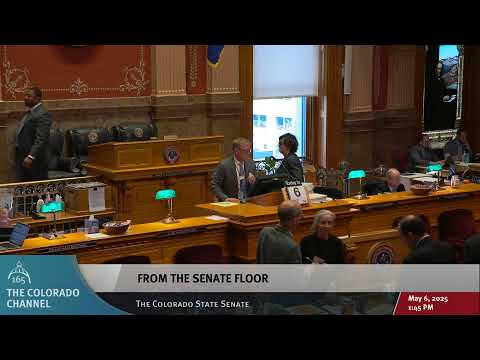
The Colorado Senate on May 6, 2025, passed House Bill 13 12, known as the Kelly Loving Act, which adds clarity and enforcement language to state anti‑discrimination protections for transgender Coloradans.
The bill passed after lengthy floor debate that included testimony from senators on both sides who framed the measure as either a necessary protection for a vulnerable population or an overreach that risks intruding on parental authority and free speech.
What the bill does
- Civil-rights protections: The measure amends the Colorado Anti-Discrimination Act (CADA) to address chosen names and gender identity in public accommodations, employment, housing and health care contexts.
- Records and forms: It requires state and public entities to accept and use a person’s chosen name and gender marker on public forms when statutorily permitted, and clarifies mechanisms to update records.
- Schools and chosen names: If a local education provider adopts a policy regarding chosen names, the bill requires that policy be inclusive of all reasons a student might adopt a name and sets expectations for how dress codes are administered so that students may select options allowed in the policy.
- Enforcement: The bill uses existing civil‑rights enforcement structures (the Colorado Anti-Discrimination Act framework and the relevant state civil-rights agency) to adjudicate complaints related to named protections.
Floor debate and principal concerns
Supporters, including sponsor Senator Winter and other proponents, emphasized the bill’s intent to reduce discrimination and to protect the health and safety of transgender Coloradans. Supporters cited testimony from parents, teachers and transgender adults describing better mental‑health outcomes when identity is respected and when administrative barriers to record changes are removed.
Opponents argued the bill could allow schools or state actors to implement chosen-name policies without parental notification in some scenarios, could expand the civil-rights agency’s remit in ways that chill speech, and might conflict with settled family-law presumptions about parental rights.
Several senators raised constitutional and statutory concerns and highlighted specific sections (notably sections described on the floor as 6 and 7 in the revised bill) that govern school practice on chosen names and dress codes. Other speakers noted that the bill had been revised substantially from its introduced form and that some contentious provisions had been removed in response to criticism.
Vote and outcome
On final passage the Senate recorded the vote: 20 ayes, 14 noes, 0 absent, 1 excused. The roll call included named senators voting no and named senators supporting the bill. The Senate message recorded the bill as passed and to be sent on for enrollment and the next steps in the legislative process.
Authorities and legal framing
Senators debated the interaction of this bill with existing Colorado statutes that recognize parental rights and responsibilities and referred explicitly to state education statutes and to anti‑discrimination law. Supporters framed the act as bringing explicit protections into alignment with current anti‑discrimination frameworks; opponents warned the bill’s language could invite administrative enforcement in family settings.
What to watch next
Sponsors said they intend the bill to reduce barriers to services and records for transgender Coloradans and to clarify protections in public accommodations. Implementation and enforcement questions will be shaped by administrative guidance and, potentially, litigation addressing the intersection of family law, school policy, and civil-rights enforcement.
Ending note
Senators on both sides described the bill as consequential. Supporters called it a necessary reaffirmation of equal treatment; opponents described it as a problematic intrusion into family decision-making. With passage, the measure sets the stage for rulemaking, administrative guidance and potential legal challenges that will further clarify how the protections operate in practice.