Get Full Government Meeting Transcripts, Videos, & Alerts Forever!
Get email alerts on the Juvenile Services topic
No spam. Unsubscribe anytime.
Polk County meeting ratifies support for Justice Reinvestment grant and approves juvenile crime‑prevention plan
Summary
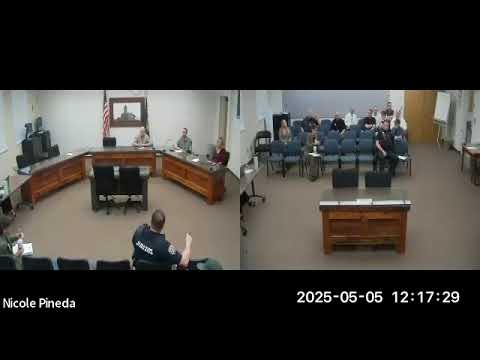
Polk County interagency justice members ratified support for a preliminary Justice Reinvestment Program grant application and approved a juvenile crime‑prevention plan during a meeting of the committee referred to in the transcript as "Lipsick."
Polk County interagency justice members ratified support for a preliminary Justice Reinvestment Program grant application and approved a juvenile crime‑prevention plan during a meeting of the committee referred to in the transcript as "Lipsick." The votes were procedural ratifications of letters and applications that had been submitted because both deadlines had already passed.
The motions forward a Justice Reinvestment preliminary application that, as described during the meeting, would fund a full‑time qualified mental health professional (QMHP) in the county jail, a half‑time case manager and prescriber hours for the jail; the juvenile crime‑prevention plan would continue funding a half‑time probation officer (PO) to support sanctioned court programming in the juvenile department. Jody Merritt, identified in the meeting as Polk County Community Corrections director, asked the body for formal ratification to comply with the committee bylaws.
Why it matters: both votes formally record the committee's support for applications that county staff said were already submitted to meet external deadlines. If the state awards funding, county officials said the awards would support staffing in the jail and juvenile services; the county has not yet received a final allocation and said any additional funds could change staffing recommendations.
Discussion and context: committee members and attendees discussed the operational implications and related system gaps that the proposals aim to address. Defense attorney Matt Jarvis and juvenile department participants described a marked increase in youth with behavioral and developmental needs appearing in juvenile court; Jarvis characterized the caseload as heavily weighted toward youth with mental‑health needs and estimated—anecdotally—that “it’s gotta be close to 75 to 80 percent” of youth who come before juvenile court have significant mental‑health needs. Jarvis and others linked part of the workload to changes in school responses (reductions in school resource officers), delays or gaps in behavioral support plans, and out‑of‑county placements for some youth.
Speakers said the juvenile department already employs one PO experienced in developmental disability (DD) services but stressed that gaps remain in how school teams, county case managers and state DD case managers coordinate behavioral support plans. A juvenile department representative (not named in the transcript) reported county DD services statistics cited during the meeting: Polk County agencies were serving about 319 youth in DD services, with 9 youth placed outside the county and 19 youth from other jurisdictions placed in homes inside Polk County. That speaker also said the department currently has about 10 youth on its caseload who are involved with DD services.
Votes at a glance
- Motion: Ratify Polk County support for the preliminary Justice Reinvestment Program application for the next biennium. Outcome: approved (voice vote). Motion and second were given on the record; vote recorded as affirmative by voice; no official tally provided. Notes: the preliminary support letter accompanied the application; the committee’s bylaws require a ratification vote.
- Motion: Ratify submission of the juvenile crime‑prevention plan to continue a half‑time probation officer to support sanctioned court programming. Outcome: approved (voice vote). Motion and second were recorded; vote taken by voice with no roll‑call or numeric tally provided.
What was not decided: committee members said the state has not yet opened the formal grant application window or announced final allocations; the county therefore has not received a final dollar amount and said any additional funding could change recommended staffing (for example, adding another half‑time QMHP if more funds are awarded).
Closing notes: members asked staff to follow up when award amounts are announced; speakers urged continuing coordination among schools, juvenile services, DD providers and law enforcement to reduce repeat crises and to improve implementation of behavioral support plans.