Get Full Government Meeting Transcripts, Videos, & Alerts Forever!
Get email alerts on the Public Health topic
No spam. Unsubscribe anytime.
Budget panel questions public health pay lines, PERS and Medicaid revenue splits
Summary
Committee members pressed Harney County public health and Rural Health Clinic staff to explain a large increase in an RN salary line, FTE splits across programs, PERS calculations and a $36,000 communication-equipment entry tied to a Motorola CAD upgrade.
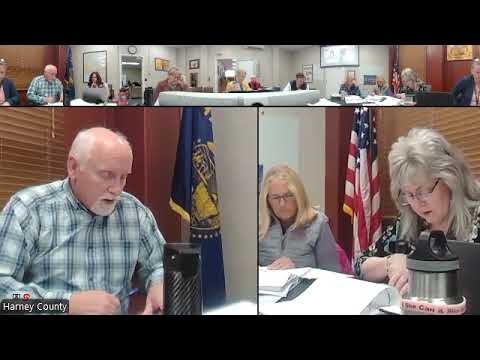
Harney County budget committee members repeatedly asked public health staff on April 29 about a sharp increase in the RN salary line and how staffing costs are split between Public Health and the Rural Health Clinic (RHC).
Committee members noted the RN 1 FTE line was budgeted at $143,000 for the coming year and asked whether that line represented a single position, multiple staff billed to the same line, or an anticipated hire at a higher starting salary. County staff said the RN line included time from multiple employees, that a nurse practitioner works across RHC and public health, and that some higher salary figures reflected recruitment and step-start estimates for experienced candidates.
The group also asked staff to verify PERS (Public Employees Retirement System) calculations. Committee members flagged a seeming mismatch between payroll increases and PERS amounts and asked staff to validate whether the budgeted PERS percentage and totals were correct. The committee asked for a written follow-up on PERS calculations.
On technology and maintenance, staff pointed to a communications equipment "installation/maintenance" line that rose to $36,000 in the proposed budget. Staff said much of that amount tracked to a one-time Motorola CAD (computer-aided dispatch) upgrade and an associated data-transfer cost; committee members asked whether post-upgrade recurring fees would be materially smaller. Staff said the upgrade had one-time costs and that subsequent years are anticipated to carry lower maintenance charges, though some recurring vendor fees are expected.
Discussion also covered revenue classifications. Committee members asked whether Medicaid-related matching revenue (MAC match) and other state sources were recorded correctly and whether tribal billing for services performed on tribal lands was being posted to public health revenue lines. Staff said some services are billed to the tribe or routed through state OHA funding, and they will provide a clearer written breakdown identifying which revenues are Medicaid match, which are state OHA partner funds and which reflect tribal contracts.
Why it matters: public health and the RHC together account for several million dollars in county revenues and expenditures. Staff told the committee the combined public health/RHC resources remain solvent, and the RHC has been used to cover shortfalls in public health in prior years. The committee requested clarifications before final budget adoption.
Ending: Staff committed to deliver written clarifications on RN/NP FTE splits, PERS calculations and Medicaid/tribal revenue categorization for committee review ahead of county court adoption.