Get Full Government Meeting Transcripts, Videos, & Alerts Forever!
Get email alerts on the Homelessness Winter Shelter topic
No spam. Unsubscribe anytime.
Lincoln County winter shelter reports zero hypothermia deaths in 2024, asks Newport for continuation funding
Summary
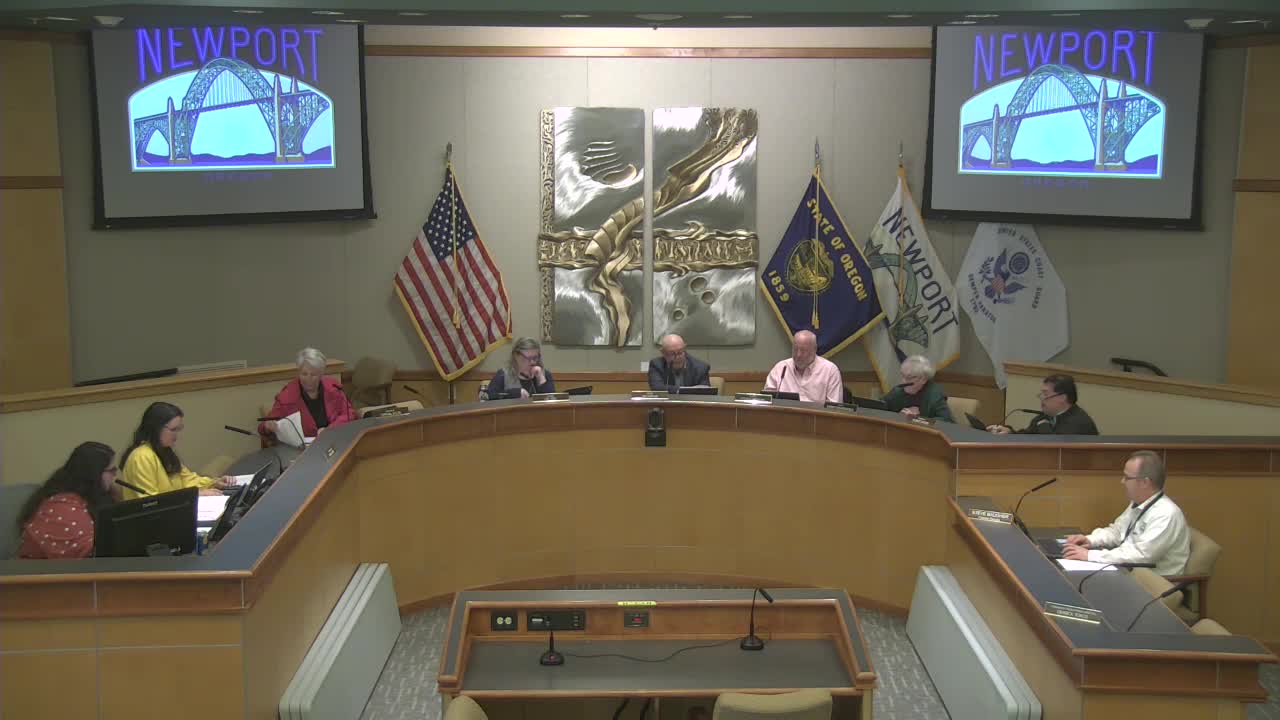
Lincoln County Health and Human Services and the county shelter presented a fiscal-year report to the Newport City Council, outlining service expansion—including an on-site medical clinic—key outcomes from the 2023–24 winter season and a request for continuation funding from municipalities.
Lincoln County Health and Human Services officials reported to the Newport City Council that the county’s winter shelter expanded services during the 2023–24 season and is requesting continued municipal funding to sustain navigation, medical outreach, staff training and volunteer development.
The shelter presentation was led by Jane Romero, director of Lincoln County Health and Human Services, with program manager Shantel Estes and volunteer physician Paul Calderon in attendance. Romero said the winter program “is to save lives one night at a time” and asked the council to continue funding the navigation/resource-center functions that support shelter operations.
Romero and Estes told council members the shelter served 242 individuals during the season, including a large share of older adults; presenters said about 45% of guests were age 50 or older and the oldest guest was 83. The shelter reported housing 39 guests into transitional or permanent housing and facilitating hotel vouchers for immediate safety needs. Staff said the program sheltered 50 animals and described a low-barrier policy that keeps pets with their owners in kennel space adjacent to guest sleeping areas.
Paul Calderon, the shelter’s volunteer physician, summarized medical work performed at the on-site clinic. “One is to keep people from having to go to the emergency room,” Calderon said, and he added the clinic’s second goal was reconnecting guests with primary care to address chronic needs. Presenters said medical outreach included wound and skin-care treatment, musculoskeletal complaints and behavioral-health triage; staff reported a soft handoff process with local clinics so patients could be seen quickly after leaving the shelter.
Presenters also provided operational details: 24 officer escorts to the shelter, 25 ER transports where the shelter took discharged patients rather than releasing them to the street, and 48 referrals to health-care and behavioral-health partners. Staff said the shelter completed site renovations that improved conditions for clients and volunteers and credited grants from the Newport Hospital Foundation, IHNCCO and a Delivery System Transformation (DST) funding stream for equipment purchases used in the clinic.
Romero emphasized training and workforce development, saying the program trained about 30 volunteers and that several staff with lived experience moved into long-term county positions. The presentation included several client success stories the presenters said illustrated how medical stability and navigation led to housing placements.
The presenters asked the council to consider continuing the same level of municipal support as the previous year, citing gaps they still want to fill: expanded volunteer recruitment, increased pet support, more transitional-housing partnerships, expanded training and transportation support, services targeted to older or medically vulnerable guests, and addition of dental services.
Councilors asked operational questions about year-round storage of supplies and staff transitions when the shelter is not open; Romero said supplies are stored at the permanent shelter location and that most staff have placement plans or moved into county jobs. Romero and Estes also described the county’s efforts to expand relationships with area clinics and hospitals to reduce pressure on local emergency departments.
The presentation concluded with councilors thanking shelter staff and volunteers and with Romero restating the request for continuation funding and municipal partnership to sustain the navigation and medical services that were added this season.
The council did not take a funding vote at this meeting; presenters were invited to provide a formal funding request for council consideration in upcoming budget or grant-review discussions.