Citizen Portal

Ranking member objects to joint digital-assets hearing, committee holds roundtable instead

3200259 · May 6, 2025

Get AI-powered insights, summaries, and transcripts

Subscribe
AI-Generated Content: All content on this page was generated by AI to highlight key points from the meeting. For complete details and context, we recommend watching the full video. so we can fix them.

Summary

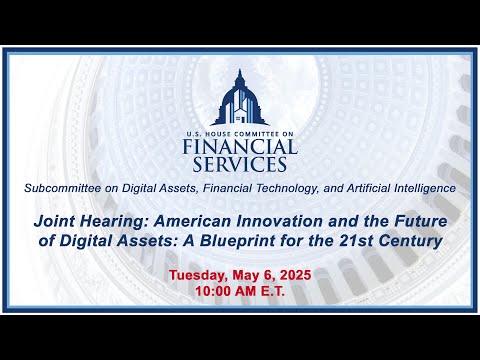
Ranking Member Maxine Waters objected to convening a planned joint House hearing on digital assets, saying the session could not proceed under House rules without unanimous consent because of alleged conflicts of interest involving President Trump and his family’s crypto interests. Committee leaders then moved the meeting from a formal joint hearing to a roundtable and heard from witnesses about regulatory clarity for digital assets.

Ranking Member Maxine Waters objected to convening a planned joint House hearing on digital assets, saying the session could not proceed under House rules without unanimous consent because of alleged conflicts of interest involving President Trump and his family’s crypto interests. Committee leaders then moved the meeting from a formal joint hearing to a roundtable and heard from witnesses about regulatory clarity for digital assets.

The objection came at the start of the meeting when the subcommittee chair attempted to convene the joint session. “This joint hearing requires unanimous consent, and I do not consent,” Waters said. She added later, “I object to this joint hearing because of the corruption of the president of The United States and his ownership of crypto and his oversight of all the agencies. I object.”

Why it matters: Members of the House committees said the session would have addressed gaps in the regulation of digital assets and aimed to create a framework that clarifies roles for regulators such as the SEC and the CFTC. Committee leaders argued that the objection prevented a jointly noticed hearing for which members on both sides had prepared, but they told witnesses they would proceed with a roundtable so members could still hear testimony and questions.

Chairman Hill (full committee) described the objection as a partisan disruption to what he characterized as a historically bipartisan process. “Through her actions today, the ranking member has thrown partisanship into what has historically been a strong, good working bipartisan relationship,” Hill said, adding that members had received notice and had negotiated witness participation. He urged the committees to continue work on “bringing digital asset markets into the regulatory perimeter and closing the gaps in regulation.”

Members and staff repeatedly cited the procedural requirement under House rules that a joint hearing requires unanimous consent to convene. The chair acknowledged the objection and said the committee would “move into a round table” to hear from witnesses who had traveled to testify. Committee staff asked participants to limit their remarks and questions to five minutes to keep the session on track.

Speakers who spoke in favor of continuing the conversation emphasized the potential benefits of digital-asset technology for real-world applications and rural communities. Agriculture Subcommittee Chairman Johnson called attention to entrepreneurs using blockchain in agricultural markets and mapping technology, naming Mark Tague of Cattleproof and Mike Horton of GeoNet as examples of “real world use cases” that regulatory clarity could enable. “If we give Americans like Mark and Mike certainty about how to build with digital assets, they will create better services that improve our country,” Johnson said.

Agriculture Ranking Member Don Davis urged a forward-looking regulatory framework and said uncertainty about the respective roles of the SEC and the CFTC should be addressed to support innovation and investor protection. “We must clarify the roles of the SEC and the CFTs [CFTC], reduce regulatory fragmentation and ensure the rules reflect the unique nature of this technology,” Davis said.

No formal vote or legislative action was taken on the record to override the objection. The committee’s immediate procedural outcome was that the joint hearing did not convene under unanimous-consent rules and the assembled members proceeded with a roundtable format. Witnesses and committee staff were heard, and the committees said they would continue to work on drafting legislation and rules to address regulatory gaps.

The meeting included references to prior joint hearings and work in the previous Congress; members said the goal remained to craft bipartisan legislation to clarify jurisdiction and enforceable rules for digital asset markets.

The committees did not announce a timeline for next legislative steps during the session.