Get Full Government Meeting Transcripts, Videos, & Alerts Forever!
Get email alerts on the Human Services Policy topic
No spam. Unsubscribe anytime.
House approves Human Services policy bill, 121–13, including opioid claims‑bar technical changes
Summary
The Minnesota House on May 5 approved House File 2115, the Human Services policy bill, 121–13, adopting policy changes affecting aging services, disability supports, behavioral health, program integrity and recovery services.
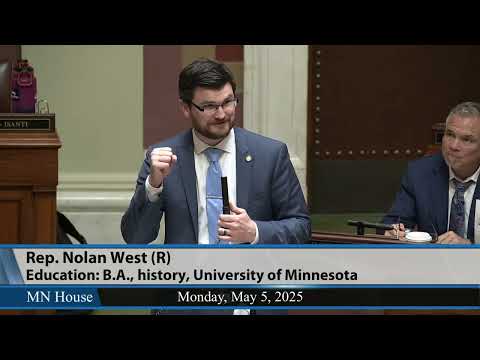
The Minnesota House passed House File 2115, the Human Services policy bill, on May 5 by a vote of 121–13 after adopting a sequence of technical and substantive amendments on the floor.
Representative Schumacher described the bill as the policy counterpart to the committee’s finance package, covering aging, disability, behavioral health, program integrity, and direct‑care and treatment provisions. Representative Noor summarized several provisions on the floor, including inspector general authority, community treatment and assertive community treatment clarifications, and miscellaneous technical fixes.
Notable policy points adopted - Aging and disability: Changes include updates to qualifications for positive‑support analysts, a review process for denials of long‑term care services, and interactions between assisted‑living cost reporting and the DWRS system. - Behavioral health and SUD (substance‑use disorder): Language clarifies who may complete comprehensive assessments, adjusts assessment timelines (excluding weekends and holidays in a 10‑day diagnostic assessment), and funds psychiatric residential treatment capacity in Clay County. - Recovery community organizations and grants: The bill clarifies certification and record‑preservation obligations for organizations that dissolve. - Program integrity and illegal remuneration: The package includes anti‑kickback language and other inspector‑general provisions to address fraud and improper remuneration; Representative Robbins urged that the kickback language be broad enough to include grants, and that topic was debated in committee. - Patient support in long‑term care: The bill clarifies that a resident’s designated support person protections apply in nursing homes and assisted living, not only hospitals.
Opioid settlement claims bar amendment Representative Baker offered and the House adopted an amendment to align state law with opioid‑settlement claims‑bar requirements so Minnesota can accept settlement funds and distribute them to localities and the state’s advisory council (ORAC). Baker said the amendment ensures Minnesota is positioned to receive settlement proceeds and implement programs for prevention, treatment and harm reduction.
Other amendments and procedure Several technical amendments to reporting and rule language were adopted. Representative Fisher withdrew an amendment on contractor case management but asked committee chairs to continue negotiations with the Senate on case management accountability. Representative Robbins also explained a grant‑related anti‑kickback proposal and asked conferees to consider including grants within the kickback statute in conference work (she later withdrew a floor amendment for timing reasons).
Final vote and next steps The House passed HF2115 as amended by a roll call of 121 yeas to 13 nays. The bill now proceeds to conference with the Senate on outstanding differences and implementation details.