Get Full Government Meeting Transcripts, Videos, & Alerts Forever!
Get email alerts on the Human Services Finance topic
No spam. Unsubscribe anytime.
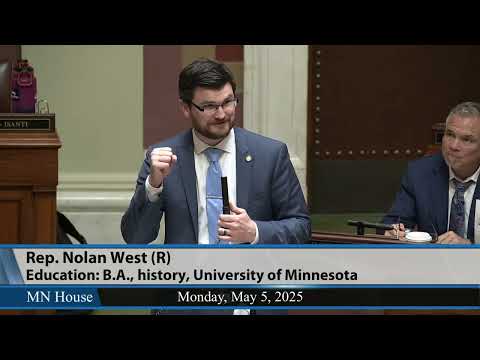
House passes Human Services finance bill after lengthy debate on costs, counties and nursing homes, 109–25
Summary
The Minnesota House approved the Human Services finance package (House File 2434) on May 5 by a vote of 109–25 after extended debate about nursing‑home funding, disability waiver rate exceptions, and county cost exposure.
The Minnesota House passed the Human Services finance bill (House File 2434) on May 5, approving the committee package 109–25 after prolonged floor debate and multiple amendment votes.
Representative Schumacher, the bill’s House author, said the package met a $1.3 billion four‑year reduction target assigned to the committee and described the measure as “a balanced, workable budget” that prioritizes program changes, rate adjustments, and targeted investments. Representative Noor, the House co‑chair on the Human Services Committee, closed the floor discussion and urged members to support the bill, describing the package as an effort to protect the most vulnerable Minnesotans while addressing the state’s fiscal outlook.
Key provisions and debates Major elements in the bill and in floor debate included: - Nursing homes: funding to address delayed reimbursement and rate changes, a bed surcharge, and provisions tied to workforce standards. Several members backed the bill’s nursing‑home support and staffing provisions; other members criticized aspects of the Nursing Home Workforce Standards Board and offered amendments (discussed below). - Disability waiver system and rate exceptions: the bill tightens documentation and narrows qualifying items for rate exceptions, includes a county share provision for some exceptions, and increases program integrity measures. Representative Schumacher told members the rate‑exception process had grown unexpectedly and required documentation to curb unplanned spending. - Early Intensive Developmental and Behavioral Intervention (EIDBI): authorization of provisional licensure and checks, and a commissioner authority to impose a moratorium on new licensure for up to 24 months to ensure accountability. - Behavioral health and substance use disorder: certification and rate increases, reduced short‑term authorizations to 60 days with assurances of MA coverage, funding for psychiatric residential treatment beds in Clay County, and changes to align treatment with federal guidelines. - Program integrity and fraud prevention: expanded background study coverage, greater preeminence of program integrity in reconsiderations, and more resources for fraud detection and training. - Homelessness and housing supports: appropriations for youth homelessness programs, shelter capital, and funding for point‑in‑time homeless census work.
Floor amendments and contentious votes The floor saw a lengthy set of contested amendments centered on the nursing home workforce standards board and county cost‑sharing for rate exceptions. Representative Zaleszny moved an amendment (A7) that would have required two‑thirds votes across categories on the workforce board; supporters argued it would ensure balanced stakeholder buy‑in, while opponents said it would effectively give veto power to categories and stall the board. The A7 amendment failed on a 67–67 tie (motion did not prevail). Representative Baker’s A17, which would have required the Legislature to approve board actions with budgetary or policy effects, also failed 67–67. Multiple other amendments touching county cost shifts and homelessness funding likewise failed on 67–67 ties or were adopted earlier in the sequence; technical and noncontroversial amendments were largely adopted.
County concerns and rate‑exception sharing A recurring theme in debate was county exposure to costs under the rate‑exception share proposals. Representatives Gilman, Zaleszny, and others described county fiscal stress and warned of property‑tax impacts; they urged revisions or relief. Committee leaders said the share is intended to introduce county involvement and accountability and noted the committee is prepared to continue conversations in conference.
Final vote and next steps After concluding debate and resolving amendments, the House passed HF2434 as amended by a roll call vote of 109 yeas to 25 nays. Sponsors said the bill balances program protection for nursing homes, behavioral health, and other services while meeting the committee’s reduction target; critics said the approach shifts risk to counties and to vulnerable populations and pledged to pursue changes in conference committee with the Senate.
Votes at a glance - House File 2434 (Human Services finance): Passed as amended, 109–25.
Speakers quoted in this report are named from the House transcript and identified by role on first reference.