Get Full Government Meeting Transcripts, Videos, & Alerts Forever!
Get email alerts on the Economic Development topic
No spam. Unsubscribe anytime.
Regional economic-development group outlines 3-year plan, urges county collaboration on sites and workforce
Summary
Ready Cincinnati presented a three‑year strategic plan to the Warren County Board of Commissioners, urging a coordinated push on site readiness, targeted industry attraction and workforce credentialing to win higher‑wage jobs.
Ready Cincinnati, the regional economic development organization serving the Cincinnati metropolitan area, presented its updated three-year strategic plan to the Warren County Board of Commissioners, detailing targeted industry priorities, site-development needs and workforce strategies.
The presenter, identified in the meeting as a Ready Cincinnati representative, said the organization’s work “is solely economic development,” and that Ready spends roughly 80% of its time on existing-industry retention and expansion. The presentation said Ready employs a staff of 23, has worked on about 775 projects over 11 years and helped bring roughly 68,000 jobs to the broader region. The group said it will focus attraction effort on life sciences (pharmaceuticals, medical devices), aerospace and aviation, food and flavor, chemicals and materials, and targeted headquarters and technology projects. The Ready representative also noted Ready is one of the JobsOhio network partners and referenced a JobsOhio contract that underpins much of the incentive work.
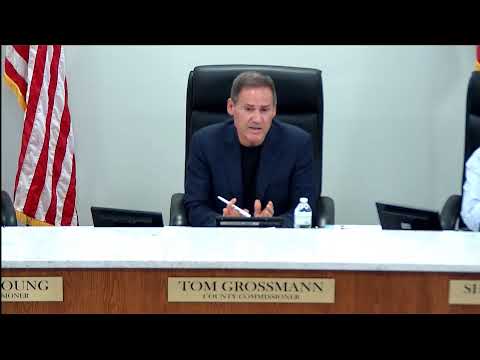
Commissioners and county staff pressed on the county’s site readiness and utilities. Commissioner Young and others asked whether Warren County should seek multiple large “super sites” or prioritize the 20–100 acre parcels that have been more common regional wins. County economic development staff (Matt Shnicki) said the county and Ready have been mapping parcels and aim to identify 2–3 candidate sites per county for large-scale development while continuing to support smaller sites. The presenter said Ready and its consultants have overlaid utility data and parcel mapping across the 15‑county MSA to flag potentially developable land, but noted the analyses did not include for-sale status or zoning.
Discussion focused on utilities and the I‑71 corridor. Commissioners and staff emphasized that water, sewer, gas, electric and fiber availability are often determinative for site viability. County staff and Ready agreed to continue conversations about infrastructure costs and whether targeted, phased utility investments (for example, package treatment plants or strategic sewer extensions) could make selected corridors development-ready. Commissioner comments included concern about piecemeal development that could produce low-value commercial strips (truck stops, service businesses) rather than higher-paying industrial or R&D users.
On workforce, Ready described national and regional recruitment challenges and said JobsOhio is preparing talent programs aimed at attracting workers and supporting upskilling. Ready asked county partners to help promote the region and to join investor-led recruitment trips. County officials asked for more specific workforce breakdowns (what share of targeted manufacturing jobs require certificates vs. 2‑ or 4‑year degrees). Ready said it would follow up with more precise percentages and described work with local colleges (including Sinclair) and Miami University on credential and certificate programs.
The presentation included regional metrics: a roughly 2.3 million population in the Cincinnati MSA, an average regional wage the presenter gave as about $74,000 (rising to about $84,000 in the Ohio portion of Southwest Ohio), and a noted count of more than 450 foreign-owned firms across the region. Ready recommended more targeted digital marketing and investor-led outreach to priority NAICS subsectors and invited county officials to participate in investor committees and trade shows.
Commissioners directed staff and Ready Cincinnati to continue the site-readiness work and to return with more detailed cost and feasibility estimates for targeted infrastructure upgrades on the I‑71 corridor and other candidate zones.
Quotes used in this article come from the Ready Cincinnati representative and the county staff and commissioners who spoke during the presentation and discussion.