Get Full Government Meeting Transcripts, Videos, & Alerts Forever!
Get email alerts on the School Counseling topic
No spam. Unsubscribe anytime.
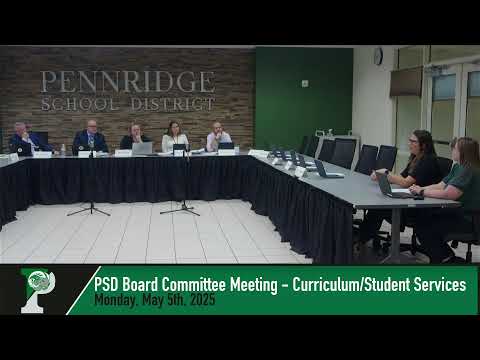
Pennridge counselors describe K'12 guidance, mental‑health supports and college/career tools
Summary
Counselors from Pennridge School District presented the district's K'12 counseling program, covering ASCA standards, social‑emotional work, Smart Futures and Naviance tools, Lakeside counseling, SAP referrals and rising AP and college‑planning activity at the high school.
Pennridge School District counselors gave a K–12 overview of guidance services and supports, describing their roles in academic advisement, social‑emotional learning and career preparation.
Presenters said their work follows the American School Counseling Association (ASCA) national model and Pennsylvania guidance standards, and emphasized the district's focus on relationships, early intervention and coordination with community behavioral‑health resources. "Relationships with everyone are at the center," said Missy Uniphore, a Seiler Elementary School counselor.
Why it matters: Counselors described increasing behavioral‑health needs among students and the district's steps to provide in‑school supports, coordinate community referrals and preserve students'access to school‑based services.
Main points from the presentation: - K–5 (elementary): Counselors highlighted direct and indirect services (classroom lessons, small groups, child‑study teams, 504 coordination and crisis referrals). The district uses the Smart Futures curriculum starting in third grade for early career exposure. - Middle school: Counselors described middle school as a developmental bridge where social‑emotional support is central. Middle counselors run small‑group and solution‑focused work, facilitate conflict resolution, and coordinate course selection and career inventories; Smart Futures work feeds into an 8th‑grade career plan. - High school: The high school has eight counselors housed in distributed "house" offices; counselors said they held more than 4,000 individual student meetings during the year. Counselors described growing Advanced Placement participation (noting a rise from about 388 AP students in 2022 to about 650 in the most recent year) and expanded college/career programming using Naviance and a staffed College and Career Center. "RAMS Time" was introduced as a morning block used for interventions, student meetings and college planning. - Mental‑health and community coordination: Presenters said the district coordinates with an internal social worker, a school psychologist, a Lakeside counselor (on‑site county resource) and external providers. Staff said they frequently make referrals for crisis care and behavioral health when needed. - Caseloads and staffing: Presenters noted counselor staffing across levels (one counselor in each elementary school, two counselors in each middle school, eight counselors at the high school). In discussion, board members said recommended counselor ratios are around 250 students per counselor; presenters said Pennsylvania's current average is higher (about 331), and district ratios vary by level.
Discussion and questions: Board members and attendees praised the presentation and the K–12 continuity; several parents and board members shared brief personal examples of counselors helping students through family transitions and crises. Presenters and board members agreed the rise in student mental‑health needs makes counseling services a district priority.
Ending: Counselors asked the board and community to view the program as a K–12 continuum that supports academics, social‑emotional development and postsecondary planning; the presentation also served to remind families how to reach counselors and the district's college and career resources.