San Mateo staff advance protected bike lanes on South Delaware Street after robust public debate
Loading...
Summary
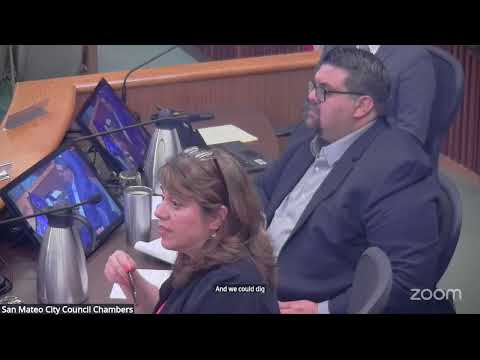
City of San Mateo public works staff presented a near-final design for the Delaware Street Safe Routes to School project at the May 5 City Council meeting and sought council feedback before filing final plans and returning later this year for construction authorization.
City of San Mateo public works staff presented a near-final design for the Delaware Street Safe Routes to School project at the May 5 City Council meeting and sought council feedback before filing final plans and returning later this year for construction authorization.
The presentation by Sang Hee Cho, an associate engineer in the city’s traffic engineering group, described a corridor-level plan that would install 0.7 miles of protected (Class 4) bike lanes from Bermuda Drive to East 20th Avenue and 0.3 miles of bike-boulevard treatments from East 20th to Pacific Boulevard. The design includes protected intersections, high-visibility crosswalks, bike-dedicated signal phases at key intersections, curb ramps to meet ADA requirements and pavement repairs along the corridor. Cho said the project is funded in part by the State Active Transportation Program and that staff plans to bid the work this year for fall/winter construction.
Cho said the project’s primary goal is to create “a safe, low-stress environment for bikes and pedestrians,” while retaining as much on‑street parking as possible and making targeted vehicle‑traffic compromises where necessary. The plan would remove one southbound travel lane for a roughly 900‑foot segment between Bermuda and Saratoga and is estimated to cost about $3.6 million, of which roughly $1.6 million is grant funding.
The presentation and subsequent public comment produced mixed reactions. Several parents, school staff and cycling advocates urged council to approve the proposed protected lanes, saying the corridor connects schools (including Fiesta Gardens and Nueva), Caltrain stations (Hillsdale and Hayward Park) and Bay Meadows park and that protected lanes would make biking safe for children and families. Kevin Simpson, a Bay Meadows resident, told the council “if you build it, they will come,” and said data and changing ridership suggest demand will grow. Phil King, a College Park parent, and teachers from Nueva also testified in favor of the project.
The county Event Center’s CEO, Dana Stohr, said narrowing southbound Delaware would create traffic management challenges during large events and could impede emergency ingress and egress on event days; she asked staff to study alternatives such as conversion of Pacific Boulevard to one way with a dedicated lane for cyclists. Staff and Event Center representatives said they will continue coordination and staff committed to follow up with event‑center leadership.
Other residents raised concerns about the local impacts of the lane reduction between Bermuda and Saratoga, specifically driveway access, trash pickup, possible additional parking demand on adjacent streets, and whether some multifamily buildings received outreach materials. Staff acknowledged an address‑list error that limited mailings to about 2,000 addresses for the latest outreach and said they will expand outreach efforts to reach more residents (staff later said corrected lists show closer to 4,000 addresses). Staff also said they coordinated with Recology about revised trash‑pickup procedures where curbside bike lanes will be installed.
Technical details highlighted by staff: a mix of K71 bollards and parking-buffered segments will provide vertical separation; speed‑reducing lane narrowing and raised crosswalks (speed tables) will serve as traffic calming; bike signal phases will be added at Saratoga and 20th Avenue; some right‑turn‑on‑red restrictions are proposed at intersections with new bike phases; and the project will repave a portion of Delaware as part of the work.
Cho said staff will monitor intersection operations after construction and adjust signal timing if needed. He told council the project is a “backbone” connector that links to other future bicycle projects and the 2020 Bicycle Master Plan’s rapid implementation network.
Council members asked staff to redouble targeted outreach to multifamily properties and non‑English speakers in nearby buildings, confirmed the project budget sources and asked staff to confirm details such as bus operations at in‑lane stops (SamTrans indicated it prefers in‑lane stops). Several council members said they support the project’s safety goals but asked staff to continue coordination with the Event Center, SamTrans and emergency services and to return with refinements. Staff said they expect to return with final bid documents and anticipate the project coming to council on a future consent or action calendar this fall.
Proponents and opponents asked council to treat the project as a testable “quick‑build” that can be refined after installation; staff said the design uses durable quick‑build materials so the corridor can be adjusted if monitoring shows changes are needed. No formal council vote was taken at the May 5 meeting; staff requested direction and will return for authorization to advertise and award the contract later in 2025.
Ending: Staff said they will continue outreach, meet with the Event Center and return to the council with final plans and a construction schedule later this year. The project remains one of the city’s high-priority bicycle master‑plan projects and will be funded largely with state active‑transportation grants plus local match.