Get Full Government Meeting Transcripts, Videos, & Alerts Forever!
Get email alerts on the Grounds Maintenance topic
No spam. Unsubscribe anytime.
Operations staff recommends leasing a field‑lining robot; district to evaluate five‑year buyout option
Summary
Operations staff recommended leasing a GPS‑guided field‑lining robot (Tiny Mobile Robots) to save staff time and paint costs; plan proposes a five‑year lease that converts to district ownership, with annual lease and support fees.
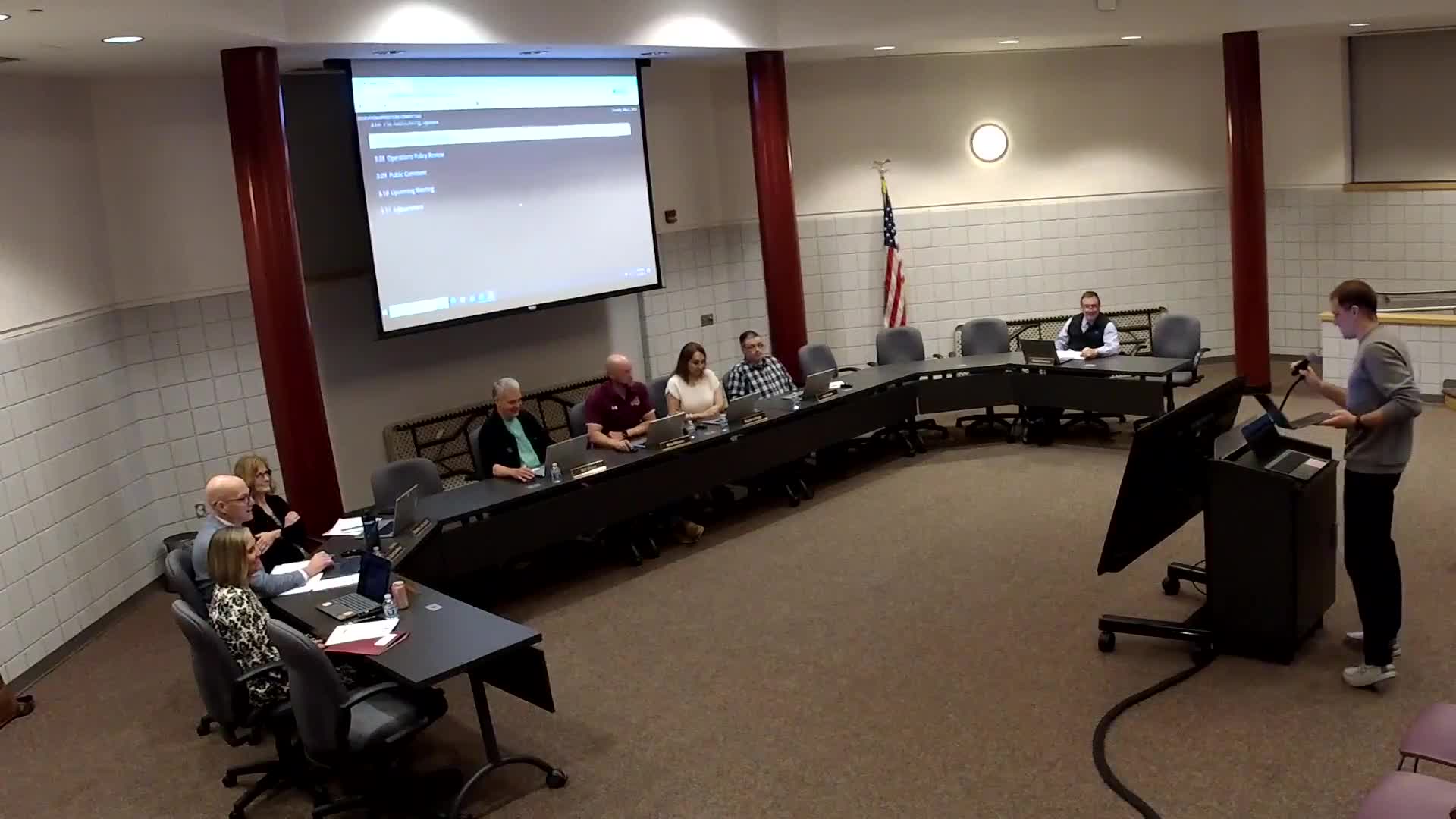
Avon Grove’s operations committee reviewed a demonstration of robotic field‑lining equipment and recommended approving a five‑year lease of a Tiny Mobile Robots field‑lining unit that would transfer ownership to the district at lease end.
Operations staff described the technology and benefits: after an initial setup on a tablet, the robot uses GPS/cellular positioning and autonomously paints lines for football, soccer, baseball/softball and parking lots. Staff said the device can reproduce dirt lines (batter’s boxes) and accurately paint field hashes that are time‑consuming for crews to lay out by hand.
Cost and terms: staff said the recommended vendor’s five‑year lease is $8,919.60 per year plus a support fee (cellular/GPS/data and maintenance) of $1,990 per year; after five years the district would own the robot and only pay the ongoing support fee. Staff noted alternative vendors would not transfer ownership and carried higher recurring costs. Presenters said routine vendor service visits (twice a year) are included in the support fee; during the lease the vendor will repair or replace units that fail.
Operational impacts: facilities staff said the robot will reduce manual labor for lining nine fall and spring fields, free staff for other maintenance tasks and reduce paint consumption. The committee discussed battery and paint logistics, end‑of‑lease trade‑in and training for students or staff tasked with operation.
Next steps: staff asked the committee to place a lease proposal on a future agenda and to prepare cost‑savings estimates (labor and paint) for comparison. Committee members favored a pilot and requested final lease terms be reviewed before contract approval.
Why it matters: the robot could reduce recurring labor demands on facilities staff and lower consumable costs while providing consistent line quality for athletics and community events.
Quotations: "After the conclusion of a 5 year lease, which we can cancel, after the completion of 1 year, we will own the robot," the presenter said, describing the vendor’s lease terms.
Ending: staff will return with a proposed contract and cost‑savings analysis and recommended start of use in fall athletics if approved.