Get Full Government Meeting Transcripts, Videos, & Alerts Forever!
Get email alerts on the Zoning Fence Variance topic
No spam. Unsubscribe anytime.
Collierville board approves 6-foot fence variance for corner lot in Bahalia Commons
Summary
The Collierville Board of Zoning Appeals approved a variance allowing a 6-foot opaque fence to be sited 19 feet from the back of the curb on a corner lot in the Bahalia Commons subdivision, overriding the zoning rule that limits opaque fences taller than 48 inches to be at least 20 feet from the curb.
The Collierville Board of Zoning Appeals on an unrecorded date approved a variance for a 6-foot cedar fence to be located 19 feet from the back edge of the curb on a corner lot in the Bahalia Commons Planned Development, case number 250815. Staff recommended approval with conditions and the applicant agreed to those conditions.
The request was presented by Town planning staff member Nandita, who said the subject property is in Bahalia Commons Phase 3B (Building 17), a corner lot north of Aldwick Drive and east of Ermel Drive, and that the lot was constructed in 2024. The applicant, Cruise Development, represented by Stephen Williams, asked to allow an opaque fence taller than the 48-inch threshold to be installed closer than the zoning requirement of 20 feet from the back of the curb so the homeowner, Michelle Vanhorn, would have a usable side yard for pets. The proposed gate location would be about 3 feet from the face of the HVAC unit.
Under the town's zoning rules described in the staff presentation, on corner lots an opaque fence or wall higher than 48 inches may not be located closer than 20 feet from the back edge of the curb; front setbacks in the subdivision are 22 feet and rear setbacks 20 feet. The proposed six-foot fence would extend 3 feet into the front-yard setback and sit 19 feet from the back of the curb. Staff said a traffic engineer reviewed the proposal and found about 70 feet of intersection sight distance on the 20 mph street, and staff recommended approval because the variance standards were satisfactorily addressed. The staff presentation noted prior BZA approvals for corner-lot fences in the subdivision but said those were on alleyways rather than public streets.
Board members discussed whether the hardship was created by the builder's placement of HVAC equipment or by subsequent site conditions; several members noted the builder's choices can create hardships for later homeowners but also observed that the requested one-foot encroachment presented minimal community impact. Alternatives discussed included locating the fence 20 feet from the curb, reducing fence height to 4 feet with at least 75% opacity, using picket-style fencing, or adding evergreen landscaping. Staff also said a zoning cleanup ordinance to address small-lot front-yard fence rules is planned later this year but that draft language and adoption were uncertain.
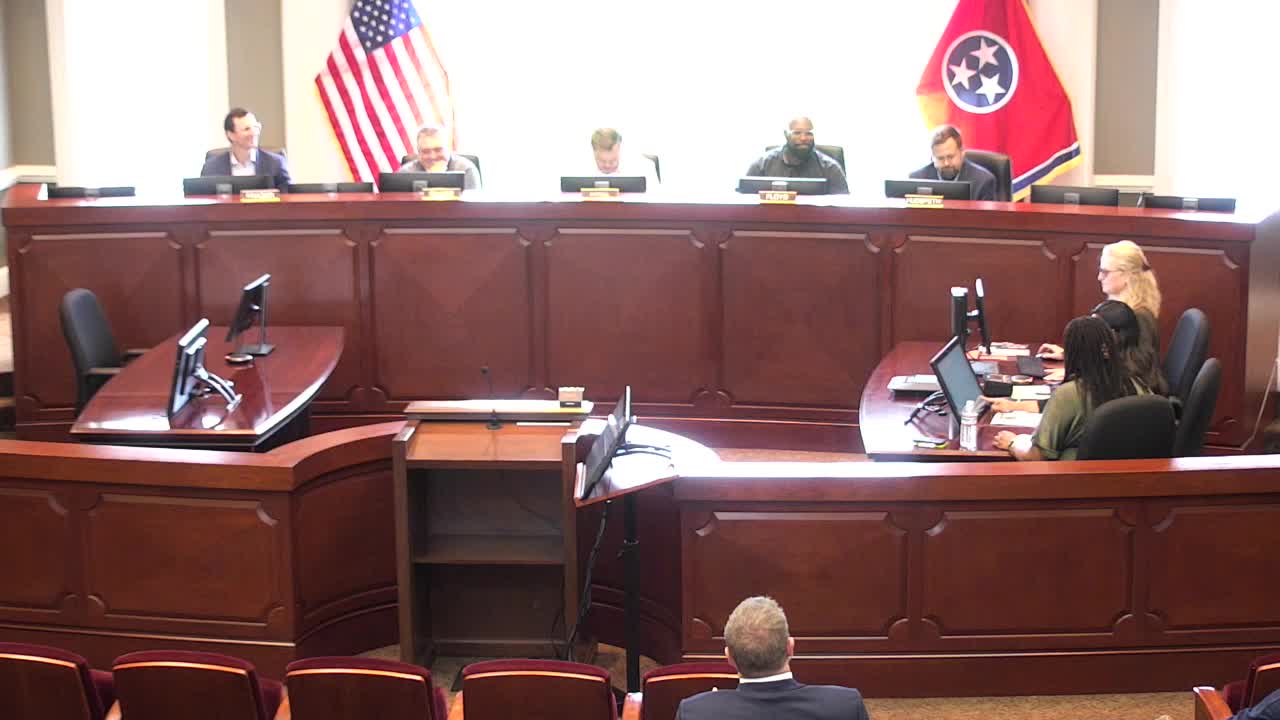
A motion “to approve as written on screen” was made and seconded. The vote was recorded as yes from Floyd, Fraser, Hudspeth, O'Hare and Letrel; the motion passed. If the variance is recorded consistent with the motion and conditions, the next step for the applicant is to apply for a fence permit through the Planning Department.
The meeting record includes staff guidance that the approved conditions are intended to limit adverse impacts; the applicant represented they accept those conditions. The agenda moved on after the vote to member training announcements and adjournment.