Get Full Government Meeting Transcripts, Videos, & Alerts Forever!
Get email alerts on the Public Defense Case Management topic
No spam. Unsubscribe anytime.
Public defenders, case managers and clients urge county to preserve pretrial case‑management funding
Summary
Multiple public commenters, including case managers and a Metropolitan Public Defender director, urged the board to continue funding a case-manager/peer navigator program that helps pretrial clients secure housing, treatment and court compliance.
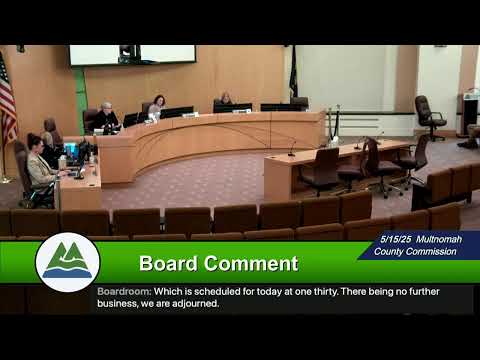
Several speakers during the March 15 public-comment period urged Multnomah County to preserve funding for case managers assigned through the Metropolitan Public Defender’s Partners for Justice program and related peer navigator services.
Caitlin Hoofnagle, a case manager with Metropolitan Public Defender, described her work connecting clients to housing, treatment and court necessities and read a written testimony from a former client asserting that case managers were instrumental in the client’s release and rehabilitation. “What data can't capture about program 25,131 b are the connections that I and my fellow case managers forge with our clients,” Hoofnagle told the commissioners.
Sebastian Duffy, a case manager who said over the past three years more than 800 justice‑impacted individuals have relied on case managers through the public‑defense office, said the role prevents justice involvement by addressing underlying needs. “Case managers help our clients not only survive, but thrive in their communities,” Duffy said, and asked the board to continue funding the peer navigator program.
Grant Hartley, Metropolitan Public Defender’s Multnomah County director, framed the program as an important response to missed court appearances and the instability caused by homelessness, substance use disorder and mental illness. He told the board that clients assigned case managers are more likely to be released from custody, make court dates and access services.
Speakers requested that the board preserve program funding during the ongoing budget process. Commissioners acknowledged the testimony and noted budget hearings scheduled later in May where the public can provide further input.