Get Full Government Meeting Transcripts, Videos, & Alerts Forever!
Get email alerts on the Finance Collections topic
No spam. Unsubscribe anytime.
Internal compliance outlines collections gains, AI pilots and P‑card oversight
Summary
Miami‑Dade’s internal compliance director described the unit’s work on gross collections, P‑card compliance, code citations and plans to pilot AI tools for collections and customer support; commissioners asked for dashboards and more detailed metrics.
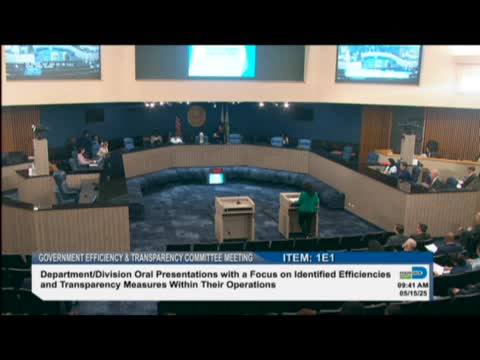
Internal Compliance Director Ofelia Tamayo told the county ad hoc committee May 15 that the newly formed unit has recovered millions and is pursuing technology and process changes — including artificial intelligence pilots — to raise collections and increase operational transparency.
Tamayo said the department handles credit and collections for the county and for Jackson Health, code citations, P‑card compliance and enterprise resource planning optimization. “We collect debt that is very dated, sometimes more than five years, could be 10 years. But we have successfully collected over $20,000,000 a year in gross collections,” she said.
Commissioners pressed for context. Commissioner Cohen Higgins asked about the total outstanding debt; Tamayo and staff said the county’s inventory of receivables spans multiple programs and includes what was characterized in the meeting as about $3 billion in outstanding items across many years and customers, while collections targets are in the tens of millions per year. Tamayo said last year’s collections were about $23.3 million and the department targets roughly $24 million annually.
Tamayo described P‑card compliance work, plans for dashboards and using chatbots and automated callers to reduce bulk mail and improve payment rates. “We are looking at artificial intelligence across the board including informs,” she said, describing automated caller pilots for payment processing and internal chatbots to reduce overrides and answer user policy questions.
Commissioners asked for dashboards and more real‑time access to collection metrics. Tamayo said some process‑and‑control reports are already posted publicly and that she is working with her collections team to develop internal dashboards to track activity and improvement opportunities. “We are working on dashboards … I think it gives us a better idea of where maybe we can make improvements and actually collect at least 10% more,” she said.
Tamayo also described code enforcement citation administration and a trust fund used to purchase enforcement technology, and said some collection efforts are coordinated across accounts so a debtor with multiple outstanding items may receive consolidated settlement offers.
Commissioners asked follow‑up questions about payment methods and anti‑fraud protections for text and digital payment prompts. Tamayo and commissioners discussed exploring multiple payment methods — including installment programs offered by third parties — while protecting against fraud and processing fees.
The committee requested follow‑up on dashboards and more detailed metrics so the commission can monitor performance in real time.