Get Full Government Meeting Transcripts, Videos, & Alerts Forever!
Get email alerts on the Metal Recycling Regulation topic
No spam. Unsubscribe anytime.
San Antonio council adopts revised metal-recycling rules after months of task-force work and public debate
Summary
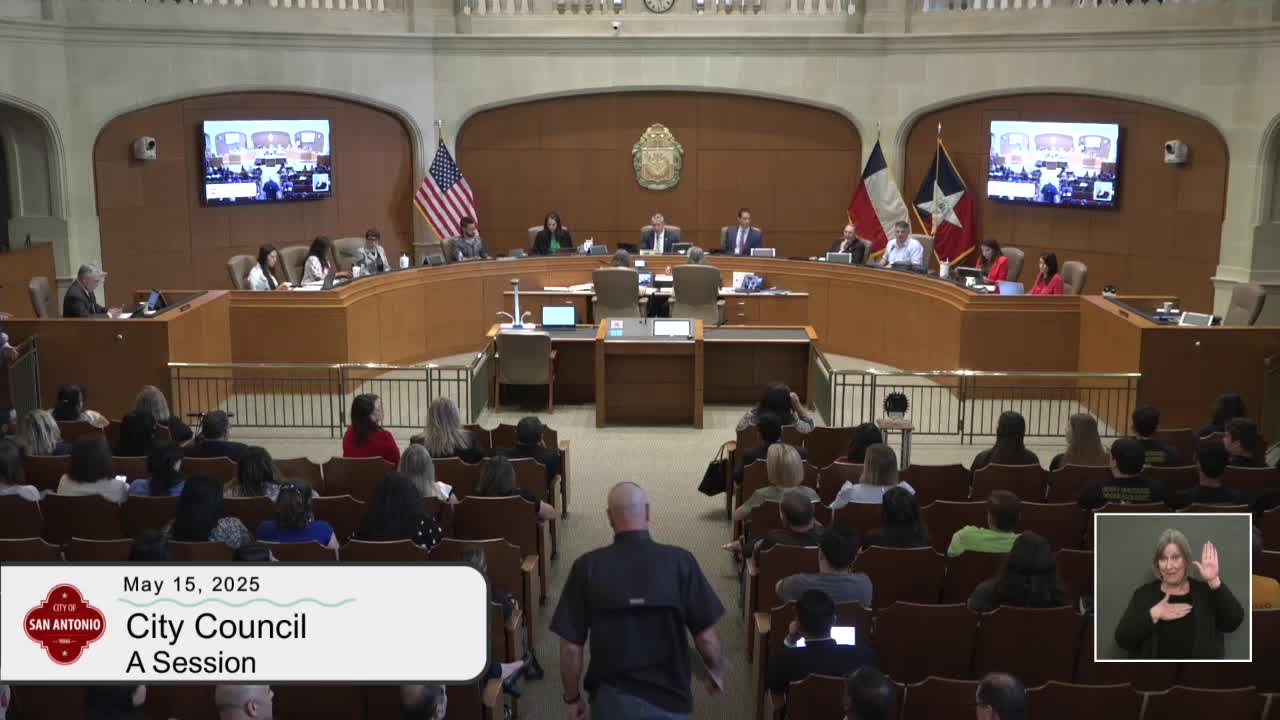
San Antonio City Council on May 15 approved revisions to Chapter 16 of the Unified Development Code that update rules for metal recycling and related uses after months of task-force work and public comment.
San Antonio City Council on May 15 approved revisions to Chapter 16 of the Unified Development Code that update rules for metal recycling and related uses after months of task-force work and public comment.
The code changes—brought to the council as item 8 and approved on the consent agenda—tighten operational requirements for metal recycling, add enforceable timelines for correcting violations and broaden enforcement options, city staff and council members said. Council member Ana Castillo thanked task-force members and staff for drafting the overhaul and said it will require periodic review.
The rewrite adds or clarifies several requirements the task force and city staff described in council discussion and public comment: shorter notice-to-correct windows when violations are found (two days instead of the current 10–30 days), authority for the city to use civil tickets in addition to criminal penalties, clearer grounds to revoke a certificate of occupancy for operating without a license, and the ability to suspend or revoke a license after three or more violations accepted by municipal court in a rolling 12‑month period (the prior period was 18 months). The revisions also specify stricter pile-height limits, require fire‑prevention plans and fencing, and add a formal definition for materials such as automotive shredder residue (commonly called “fluff”).
Industry representatives who spoke at council urged protection for longstanding businesses and said some provisions should preserve the legal status of “nonconforming” uses that existed before annexation. Lloyd Welty, a task-force participant and industry representative, said the task force spent dozens of hours updating the code and asked council to preserve state-law protections that allow businesses operating before annexation to continue certain operations. “This is a state law,” Welty told the council when explaining protections for properties annexed into the city.
Representatives of Monterey Metal Recycling Solutions, including Vice President Jeff Vexler and environmental consultant Peter Kane, said Monterey complies with state and federal oversight and provides local jobs. Jeff Vexler described ongoing neighborhood outreach and said the company works with nearby groups, including VFW Post 4700. VFW commander Mike Molina said his post, directly across the street, had not documented air-quality complaints related to the facility.
Public health and environmental advocates urged stronger limits on expansion of existing facilities in residential or flood‑prone areas. Deborah Ponce, a climate‑justice organizer with Public Citizen, told the council that fires at local metal-recycling yards in 2023 released toxic smoke into neighborhoods and prompted a city request for enforceable reforms. “Safety should not be negotiable,” Ponce said, asking the council to remove a proposed exception allowing existing recycling businesses to expand nonconforming operations.
Council member Castillo, who said the task force met regularly over eight months, described several concrete changes she said followed that collaboration: faster timelines for city responses when violations are identified, the new civil‑ticketing option, and strengthened license‑suspension language. Castillo said the city will revisit the Unified Development Code every five years and that the rewrite is a step toward preventing future incidents.
The council approved the revisions on the consent agenda. Because the item was approved as part of consent, no roll‑call tally was read into the record during the council meeting.
The council and staff said further work on implementation and community outreach will continue; the task force, members told the council, included business representatives and community stakeholders and met repeatedly to draft the language now adopted.
Ending: The adopted Chapter 16 changes take effect as part of the city code and will be enforced by Development Services and other city departments. City staff said they will provide implementation details and community outreach in the coming weeks.