Get Full Government Meeting Transcripts, Videos, & Alerts Forever!
Get email alerts on the Criminal Justice topic
No spam. Unsubscribe anytime.
Rules Committee confirms three nominees to Board of State and Community Corrections, 4-0
Summary
The Senate Rules Committee approved three gubernatorial appointees to the Board of State and Community Corrections on May 14, 2025, by a 4-0 vote. Appointees emphasized rural probation experience, medical oversight for in‑custody care, and law‑enforcement perspectives on inspections, in‑custody death reviews and data challenges.
The Senate Rules Committee unanimously approved three nominees to the Board of State and Community Corrections (BSCC) on May 14, 2025, forwarding their appointments to the Senate floor by a 4‑0 vote.
The three nominees who gave opening remarks were introduced at the hearing as: Ms. Branning (a Lassen County probation official who said she would bring a rural perspective), Dr. Karen Lai, a board‑certified child, adolescent and adult psychiatrist, and a law enforcement “Chief Branning” (a 35‑year veteran who spent 27 years with the Los Angeles Police Department). All three described their reasons for serving and what they plan to bring to the board.
Why it matters: The BSCC oversees county adult and juvenile correctional facilities, in‑custody death reviews and facility inspections. The board’s work influences detention conditions, juvenile justice data collection, and implementation of statewide reforms aimed at reducing deaths and improving care in custody.
Testimony and committee discussion
Ms. Branning emphasized her experience at the county probation department and said she would “bring a rural perspective” to the board. Dr. Lai described treating children, adolescents and young adults in county mental‑health clinics and said she sought the seat to help bridge health‑care and corrections systems. “If, through my time and work on this board, I can improve the lives of many who are incarcerated and prevent even 1 more death in a facility from occurring, it will be more than worth it for me,” she said.
The law‑enforcement nominee focused on oversight, transparency and the board’s ability to issue public recommendations. He said the board cannot enforce every recommendation but that public reporting and the inspection process are mechanisms to encourage local implementation.
In‑custody deaths, inspections and juvenile data
Committee members pressed nominees on the board’s role implementing recent in‑custody death review legislation and on inspection processes. Members noted that Lisonbee Ganter and the board’s inspection staff have been conducting both announced and unannounced visits and producing detailed reports; nominees expressed confidence in those procedures and in the division tasked with in‑custody death reviews.
Members also raised longstanding problems with juvenile justice data and recidivism measures. The nominees and staff said juvenile recidivism is tracked but that data access is complicated by confidentiality rules, differing local definitions of recidivism, and antiquated reporting systems that make cross‑jurisdictional comparisons difficult. The board said these are areas that require continued attention.
Prop 36 grants and local capacity
Members discussed Proposition 36 (voter‑approved programs for treatment and supervision) and associated grant funding administered by the board. Committee members and nominees said funding and program details remained in early stages: the hearing record includes discussion of a rebalancing of roughly $127 million across related initiatives and a requirement in a large Los Angeles settlement that the county develop roughly 1,900 community beds, with about 1,700 expected online within two years. Nominees said they would work with counties and state partners as the board develops any grant solicitations and oversight plans.
Vote and next steps
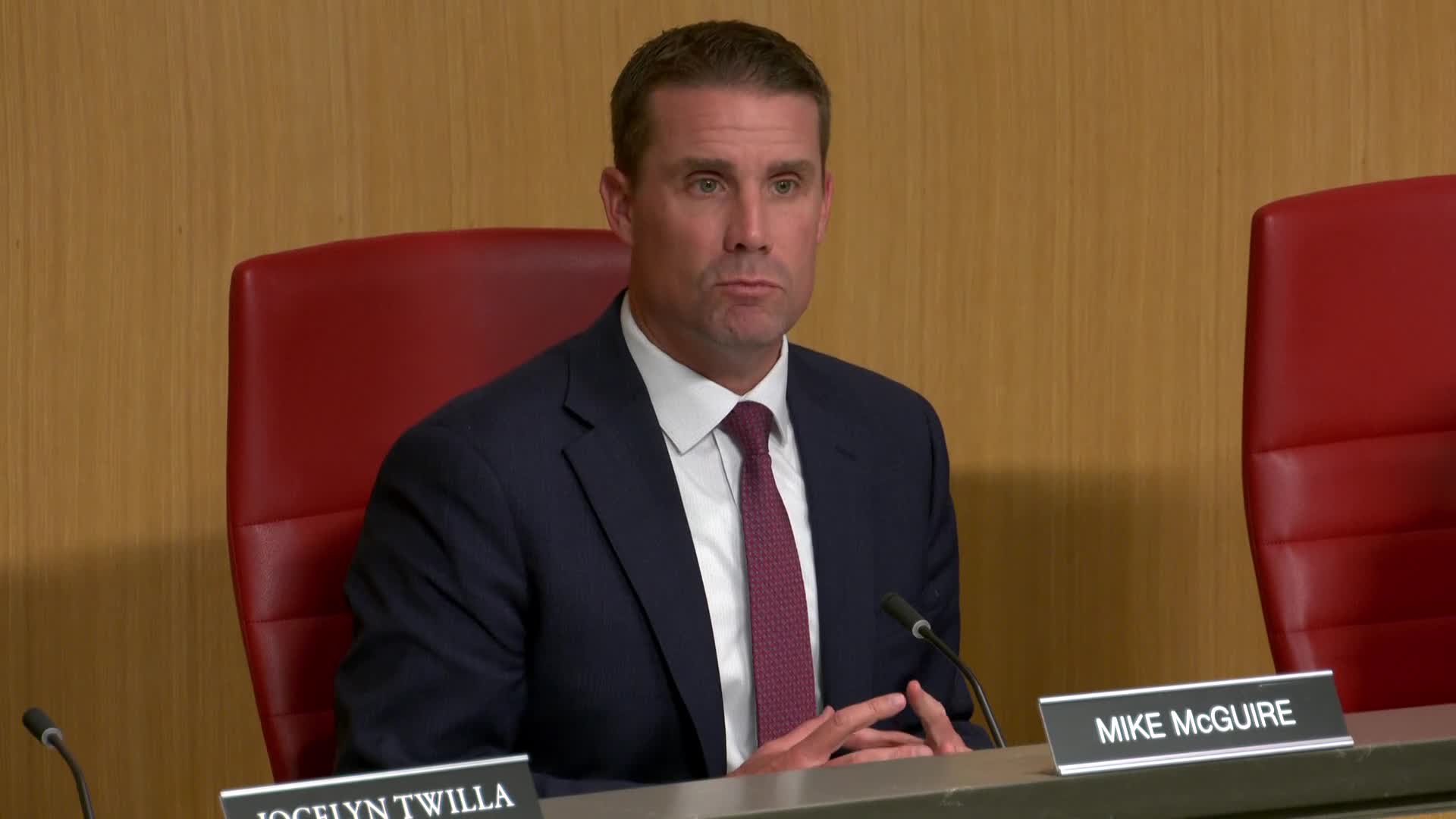
The committee recorded a 4‑0 vote (McGuire, Gonzales, Jones, Laird) to approve the three appointees and forward their nominations to the Senate floor for final confirmation.
Quotes
“I look forward to bringing my rural perspective to the board,” Ms. Branning said in her opening remarks.
“I was immediately intrigued,” Dr. Karen Lai said of being offered the appointment and described recent site visits and onboarding with BSCC staff.
What the record shows (actions and authorities)
Action: Committee approval of three nominees to the Board of State and Community Corrections — outcome: approved 4‑0 (Yes: McGuire, Gonzales, Jones, Laird). Motion recorded in committee.
Next: The nominations proceed to the Senate floor for consideration.