Get Full Government Meeting Transcripts, Videos, & Alerts Forever!
Get email alerts on the Wildlife Management topic
No spam. Unsubscribe anytime.
Wildlife staff: ruffed grouse numbers high, county moves to DMU-based deer quotas
Summary
A DNR-affiliated wildlife presenter reported high ruffed grouse counts, ongoing woodcock surveys and proposed deer-management-unit (DMU) quotas that shift harvest allocation across county lines; committee members asked about roadkill and data sources.
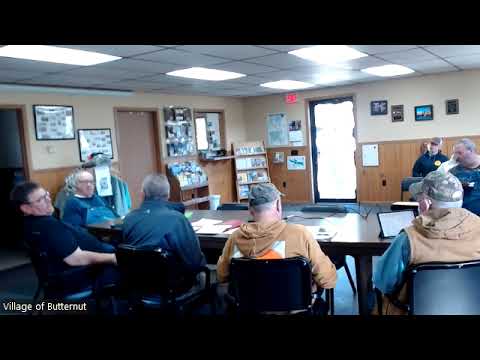
A wildlife staff member working with the Department of Natural Resources told the Ashland County Forestry Recreation Committee that field surveys this season show high ruffed grouse counts while woodcock numbers have not yet peaked. The presenter also discussed wolf-collaring work, upcoming trapping, and changes to how antlerless deer quotas are set.
The presenter said county deer quotas are moving away from a single countywide system toward deer-management units (DMUs) that cross county lines. He reported that the County Deer Advisory Committee (CDAC) recommended a quota of 35 for Unit 105 (Apostle Islands), a quota of about 1,390 for Unit 113 (western/northern portion), and recommended numbers for Unit 118 and neighboring Iron County that are still being negotiated; the presenter said one proposed split would yield about 200 private-land tags and 100 public-land tags for a specific DMU spanning counties.
Committee members asked how roadkill was counted and whether it affected population estimates. The presenter said contractors keep records of carcasses removed and that those data are included in population estimates. He added that Iron County’s roadkill was “significantly up” in recent comparisons and that multi-year trends (periods compared roughly as 2012–2016, 2016–2020 and 2021–current) showed an upward trajectory in carcass counts in some areas.
The presenter said the DMU rollout this year used legacy data to get the system in place and that refinements are expected next year. He explained that the DMUs were designed to better match habitat types and that, in some areas, historical county-wide quotas resulted in different harvest patterns.
Committee member Marty Dietek and others pressed for data and the presenter offered to bring five-year summaries of roadkill and related metrics to the next meeting. The presenter also noted that some data gaps exist when individuals remove carcasses without registering them, and that contractor reporting practices vary, which can affect the counts.
The committee did not take formal action on wildlife management matters at this meeting; the exchange was presented as an update and a chance for members to request additional data.