
South Pasadena board hears EdTech committee recommendation to keep phones off during instruction; K–8 ‘away for the day’ proposed
Get AI-powered insights, summaries, and transcripts
Sign Up Free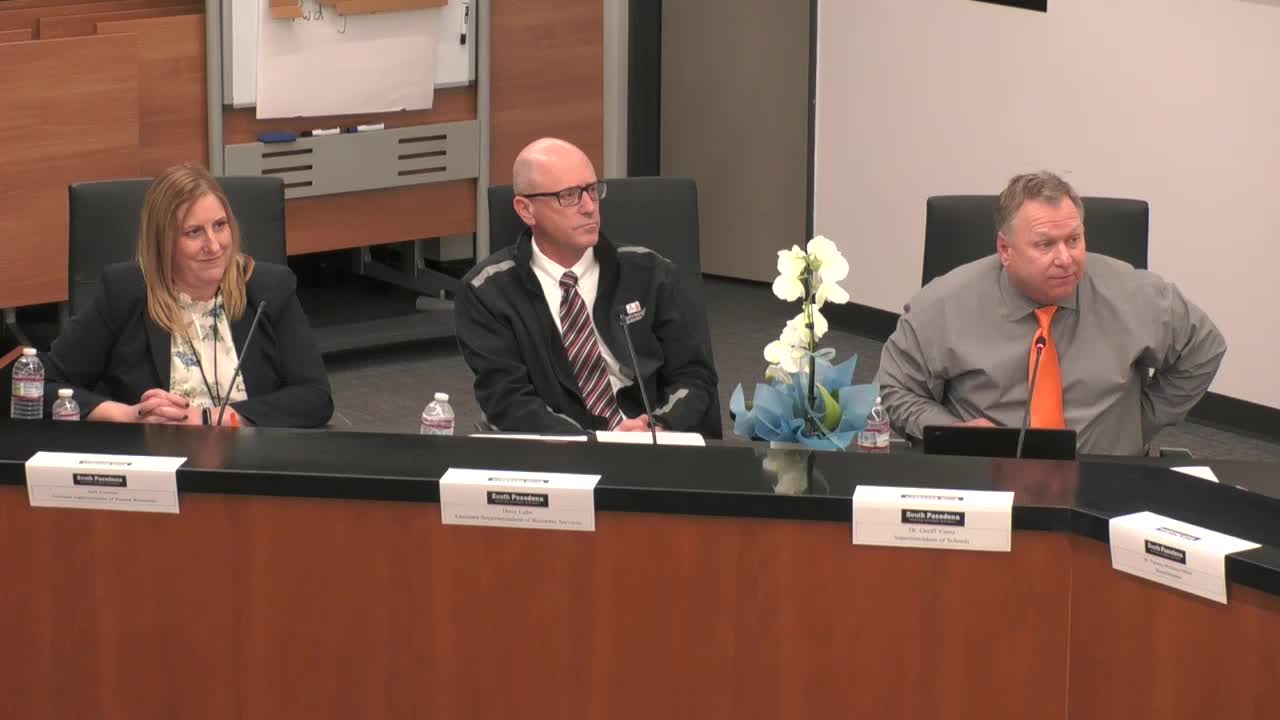
Summary
The South Pasadena Unified School District Board of Education on Tuesday heard EdTech committee recommendations to restrict student mobile device use: "away for the day" at elementary and middle schools and limited access at the high school during breaks, with staff asked to return in June with implementation details.
The South Pasadena Unified School District Board of Education on Tuesday heard a detailed report and recommendations from its EdTech committee on limits to student mobile device use.
The committee recommended keeping devices "away for the day" at elementary and middle schools and retaining a developmental approach at the high school that prohibits device use during instructional time but allows access during brunch, lunch and passing periods. The presentation summarized parent, student and staff survey results and proposed operational steps — including monitoring software for district Chromebooks and a parent-facing monitoring app — for next school year.
The recommendations grew from a nine-month process the committee said included teachers, parents, site administrators and student leaders. Ms. Gervais, who led the presentation for district staff, said the work began after CaliforniaPhone Free Schools Act and said the draft policy is ahead of the July 2026 statutory deadline.
Committee members presented separate results by level. At the elementary level, 86% of parent respondents supported the current practice of restricting devices during the day; teachers and staff largely agreed. The committee recommended prohibiting device use during instructional time, recess, brunch and lunch unless a teacher or administrator grants permission, and adding earbuds/headphones and pagers to the policydefinition of mobile communication devices.
At the middle school level, 83% of parents agreed with the policy; student support was lower. The committeerecommended a policy aligned with the elementary approach: broadly "away for the day," with limited, teacher-granted exceptions.
For the high school, the committee reported mixed results: 72% of parents supported the current policy that prohibits phones during instruction but allows them at brunch and lunch. Student presenters Sienna Drake and Natasha Ray, both seniors and ASB leaders, told the board students generally preferred the balanced approach. "Allowing phones during breaks makes students more likely to comply with the policy during instructional time," Sienna said, adding that banning phones at the high school previously had increased tension between students and administrators.
The committee also recommended operational steps unrelated to the draft policy text: roll out ClassWise monitoring for district Chromebooks, require students to sign in with district accounts on school devices so teachers can monitor activity, consider a phased approach to the districtbring-your-own-device practice at the high school, and develop additional digital citizenship education and parent training.
Board members probed enforcement and equity concerns. Multiple trustees said enforcement logistics and unintended consequences must be examined before adopting any more stringent policy, and asked staff for implementation options that would not shift an undue enforcement burden onto teachers.
Superintendent Jeff Yance and committee members said the district will pilot expanded teacher training on Chromebook monitoring, provide parent education on the new monitoring tool, and return to the board with additional information and a recommended timeline. The board directed staff to return to the board as a discussion item in June with implementation and enforcement details so members could consider action later in the month or at a subsequent meeting.
No final policy was adopted Tuesday; the board did not vote on the draft. The committeemembers emphasized that work on social media and generative AI remains a priority for next year.