Get Full Government Meeting Transcripts, Videos, & Alerts Forever!
Get email alerts on the Affordable Housing topic
No spam. Unsubscribe anytime.
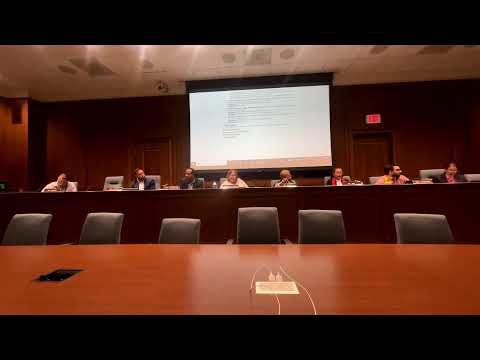
Council donates Beaver Street lots to SACA Development for affordable housing after contentious debate
Summary
Lancaster City Council voted unanimously May 13 to donate parcels at 339–341 Beaver Street to SACA Development Corporation for affordable housing, drawing strong neighborhood opposition from residents who had pursued a community park for the site.
Lancaster City Council voted May 13 to donate the City-owned parcels at 339–341 Beaver Street to SACA Development Corporation for development into owner-occupied and rental affordable housing.
The resolution approved by council transfers the lots to SACA subject to deed restrictions intended to preserve affordability: owner-occupier sales are limited to households at or below 80% of Lancaster County area median income (AMI) and rental units are to be limited to households at or below 60% AMI. The record and presentations at council also noted a 15-year deed restriction term and referenced prior planning and fundraising the city had undertaken for a neighborhood park at the same site.
Mayor Deneen Serachi summarized the parcel’s history, saying the site had originally been planned as a park by the Community Action Partnership but that subdivision, safety and rising cost obstacles stalled that effort. Serachi told council the city had earlier raised about $25,000 toward a park and estimated development costs had grown from roughly $250,000 to about $600,000 by 2023. The mayor said SACA has a track record of infill affordable housing work in the neighborhood and the donation was intended to produce units the city otherwise could not deliver.
The proposal prompted lengthy public comment at the council meeting. Neighbors and residents who said they had worked for years to maintain the lot urged council to delay or reverse the decision and questioned whether the city should give the site away to a nonprofit developer. Several speakers described volunteer maintenance they had provided to keep the lot usable for children and argued the site remained more urgently needed as a small neighborhood park. Some speakers also claimed the ground had been contaminated when the property was previously disturbed; the mayor said no EPA contamination determination was in the city files but acknowledged difficult site conditions and cost increases.
Council members asked for and received clarifications about the affordability restrictions. Director of Community Planning and Economic Development Betsy Logan and the mayor explained the AMI-based limits are standard HUD-derived measures (varying by household size) and that the deed restriction is intended to preserve affordability for the stated term. Councilor Hirsch noted the property’s assessed value appears low—approximately $1,500, according to remarks in the meeting transcript—and said he supported the resolution because it would add affordable units and because SACA has completed similar projects.
A motion to table the donation was made during public comment but failed for lack of a second and the item was put to a vote. The roll call recorded by the clerk was: Mr. Med (Aye), Mr. Royo (Aye), Mr. Cleese (Aye), Ms. Craig (Aye), Ms. Diaz (Aye), Mr. Hirsch (Aye), President Behnken (Aye). The resolution passed.
Councilors and the mayor said any subsequent construction would still have to go through the normal land‑development, planning and permitting processes. The mayor also said the city has invested in other nearby parks and that larger park improvements across the south of the city are planned as part of a separate, bonded program.
The approved donation agreement names SACA Development Corporation (a Pennsylvania nonprofit housing corporation) as the transferee and requires that the property be developed into owner-occupied or rental affordable housing in accordance with the deed restrictions described in the agreement. The agreement and deed restriction text were referenced as exhibits in the resolution material presented to council.
If SACA proceeds to design buildings on the narrow property, that development will return to municipal land‑use review and permitting. Several neighbors asked the city to consider alternatives including a community-led park and requested more community engagement before any construction. SACA did not present a detailed building plan at the May 13 meeting; councilors and members of the public asked whether SACA would present conceptual designs at a later community meeting.
Votes at a glance: the council approved the donation resolution by unanimous recorded vote (all present council members voted “Aye”), and the resolution will allow the city to convey 339–341 Beaver Street to SACA Development Corporation subject to the affordability deed restrictions and the usual land‑development approvals.
Community reaction after the meeting remained mixed. Several residents who spoke at the meeting praised SACA’s track record on affordable housing but said the neighborhood-led effort to convert the property to a park had not been exhausted. Others said they feared loss of open space and asked for stronger community safeguards. The mayor and council framed the action as an attempt to produce affordable units in a neighborhood with demonstrated need and noted the donation is only the first step in a process that includes design review, permitting and potential additional public financing.