Get Full Government Meeting Transcripts, Videos, & Alerts Forever!
Get email alerts on the Transit Funding And Ridership topic
No spam. Unsubscribe anytime.
RFTA seeks $550,000 in partners for two‑month fall fare‑free pilot to test ridership elasticity
Summary
The Roaring Fork Transportation Authority told Pitkin County commissioners it plans a fall pilot (Oct. 1–Nov. 30) making regional routes fare‑free to test ridership response and greenhouse‑gas impacts; RFTA estimates lost fare revenue of about $550,000 and is seeking local funding partners to cover the shortfall.
Roaring Fork Transportation Authority (RFTA) staff proposed a two‑month, fall season pilot to make RFTA regional services fare‑free from Oct. 1 through Nov. 30 and asked the Pitkin County Board of County Commissioners to consider supporting the initiative or help identify partners to backfill an estimated $550,000 in lost fare revenue.
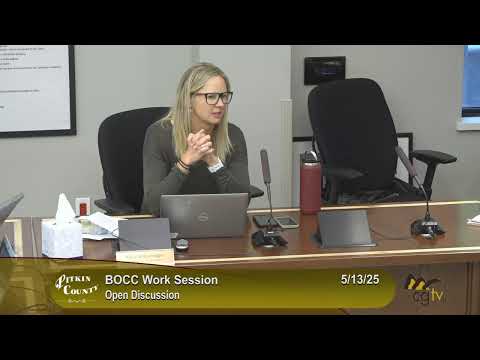
David Johnson, RFTA director of sustainability and legislative affairs, and David Pettenczyk, RFTA chief operating officer, explained at a May 13 work session that the pilot targets the agency’s fall “off‑peak” period and would apply to RFTA’s regional routes (RFTA’s BRT service, the Valley Locals and the Hogback routes). The Maroon Bells shuttle and some other seasonal services would not be included.
“Because of the magnitude of the program — two months entirely fare free — we are looking for financial partners to backfill the estimated $550,000 in lost fare revenue,” Johnson said.
RFTA staff said the pilot aims to measure ridership elasticity and behavioral changes hour‑by‑hour across routes, with quantitative boarding data and a short onboard passenger survey to collect trip purpose and origin‑destination information. RFTA noted analogous programs elsewhere saw ridership increases in the 30–40% range during limited trials; the authority used those figures to model possible outcomes but said local results may differ.
RFTA said it chose the fall season because it is generally lower ridership (and thus RFTA believes the system can absorb additional riders without adding buses) and because the “10‑to‑2” messaging approach explored earlier would be difficult to execute operationally. Staff said RFTA is currently fully staffed with drivers — a factor they cited as enabling the pilot this year when prior staffing shortages had prevented similar experiments.
Potential cons flagged by staff and commissioners included the risk of additional “non‑necessary” or joy‑riding trips that could create capacity issues, the need to refund or credit season‑pass holders for the two fare‑free months (RFTA said pass refunds or credits are included in the estimate), and the question of how any fall pilot findings would scale to peak summer or winter seasons when vehicles are near capacity.
RFTA staff outlined measures of success: a measurable increase in boardings, minimal negative impacts to capacity, limited need for additional buses, positive customer feedback and an estimate of greenhouse‑gas offsets. Johnson said the authority would compare fall 2025 boardings to fall 2024 and run passenger surveys; RFTA also plans to coordinate with local traffic‑count data to assess any modal shift from cars to transit.
RFTA said it is seeking funding partners immediately to meet a decision timeline that the authority hopes will allow outreach, marketing and operational arrangements in time for an October start; if RFTA cannot secure funding this season, the authority said it would consider a 2026 launch.
Ending: Commissioners discussed the ask and the broader policy implications. Several commissioners signaled openness to supporting the pilot but stressed the need for more partners from across the valley; one commissioner said she would withhold support on Thursday’s EOTC vote unless broader funding from member jurisdictions was secured.