Get Full Government Meeting Transcripts, Videos, & Alerts Forever!
Get email alerts on the Combined Sewer Overflow topic
No spam. Unsubscribe anytime.
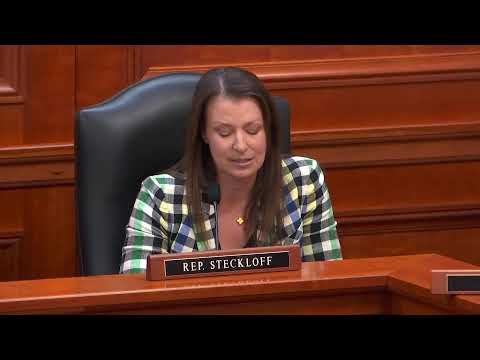
Rep. Steckloff raises sewage-overflow concerns in Southeast Michigan and cites introduced penalty bill
Summary
Representative Rip Steckloff told the subcommittee that a recently introduced bill would penalize Oakland and Macomb counties over combined-sewer overflows; EGLE staff said aging combined and stormwater systems cannot handle modern storm events and that significant investment is required.
Representative Rip Steckloff raised concerns about combined sewer overflows in Southeast Michigan during questions following EGLE’s presentation, citing a recently introduced bill that he said would impose financial penalties on counties that fail to prevent raw sewage discharges during heavy storms.
Steckloff said a local report found roughly 2 million gallons of raw sewage discharged during heavy rain events and said a penalty structure in a bill under consideration could include fines (he referenced figures discussed publicly, including per-gallon penalties). He warned that aging infrastructure across the region imposes substantial costs: Steckloff said Oakland County has estimated it would take $3 billion to $4 billion and 20 to 30 years to fully fix the problem within its systems.
EGLE Deputy Director Travis Bosco responded that combined and stormwater systems were not built for the intensity of recent storms and that substantial investment and time are necessary to address the problem. "I frankly, I don't know. Right? It takes investment and it takes time," Bosco said, later adding, "find billions of dollars and invest it." He noted interim steps can reduce stormwater inflow to combined systems but said there is no simple or immediate fix.
Nut graf: The exchange put a spotlight on the mismatch between regulatory expectations, proposed penalties and the scale of infrastructure investment required. Lawmakers and agency staff acknowledged a need for multi-billion-dollar capital investment and longer-term planning to reduce combined-sewer overflows and protect downstream waters such as the Clinton River and Lake St. Clair.
Details and context
- Steckloff said the city of Center Line (referenced as Centerline in discussion) released a report alleging about 2 million gallons of raw sewage were released during heavy storms and that preventing overflows at certain treatment works would require flooding homes in order to avoid plant overrun — a claim he cited to illustrate the tradeoffs facing operators.
- Costs and timeline: Steckloff said Oakland County estimated a $3–$4 billion price tag and two-to-three decades to fully address the problem; EGLE staff confirmed that aging combined systems and increasing storm intensity complicate remedies.
- Committee response: The chair thanked the speakers and the committee ended the meeting after approving minutes by unanimous consent.
Ending: No formal action on the bill Steckloff referenced was taken during the meeting; members directed no immediate vote. EGLE staff offered to continue working with communities on interim measures and longer-term finance options discussed earlier in the presentation.