Get Full Government Meeting Transcripts, Videos, & Alerts Forever!
Get email alerts on the Deputy Registrars Dvs Online Transactions topic
No spam. Unsubscribe anytime.
Deputy registrars urge revenue sharing, object to online driver's-license language; conference committee considers open appropriation for reimbursements
Summary
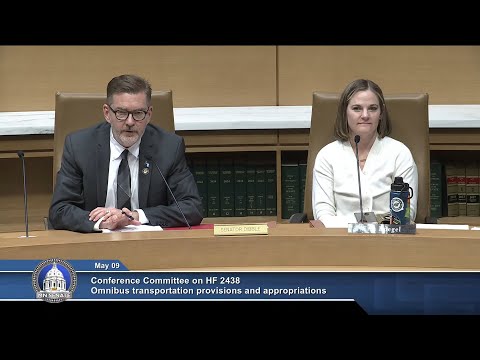
Minnesota deputy registrars and their representatives told the Transportation Conference Committee that online driver's license renewals without revenue sharing would undercut their offices; committee staff described an amendment to make the no-fee reimbursement an open, ongoing appropriation.
Jim Hurst, representing the Minnesota Deputy Registrar's Association, urged the conference committee to reject House language allowing online driver's license renewals that does not include revenue sharing with local deputy registrar offices. Hurst said the Department of Vehicle Services (DVS) would realize revenues that are currently the local offices' only source of income and that prior independent studies recommended revenue sharing for online transactions.
Why it matters: Deputy registrars provide in-person vehicle and driver services across counties, cities and private offices; their representatives said a shift of transactions online without revenue sharing would reduce the financial viability of those local offices and could reduce access for some residents.
Hurst described several legislative and independent studies — the King report, the Barry Dunn report, and an Office of Legislative Auditor review — that concluded revenue sharing as a condition for online transactions. He said online transactions could yield about $2 million annually to DVS while deputy reimbursements are pegged at approximately $2 million a year.
Committee staff and agency representatives explained a proposed amendment (A34) to change the reimbursement from a fixed direct appropriation to an open ongoing appropriation. DVS staff indicated the open appropriation would allow reimbursement amounts to flex year to year with actual transactions and the agency's operating account rather than being strictly first-come, first-served if a fixed dollar amount were specified.
Next steps: Chairs said they would continue reviewing language and fiscal impacts over the weekend and into next week. Members discussed the longstanding structural questions around deputy registrar finances and suggested further conversation about business models and potential private-sector roles in delivering these services.
Ending: The hearing left the issue unresolved; committee members asked for additional fiscal analysis and stakeholder discussion before finalizing language.