Get Full Government Meeting Transcripts, Videos, & Alerts Forever!
Get email alerts on the Suicide Prevention Bridge Barriers topic
No spam. Unsubscribe anytime.
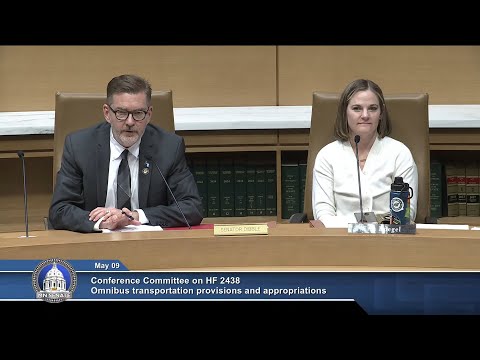
Advocates press conference committee to fund suicide-prevention barriers on Washington Avenue Bridge
Summary
Family members and safety advocates urged the Transportation Conference Committee to include funding for permanent suicide-deterrent barriers on the Washington Avenue Bridge, citing lives saved by temporary fencing and studies showing large reductions in site-specific suicide deaths.
MJ Weiszblayer, a Minneapolis resident and mother of a woman who died by suicide on the Washington Avenue Bridge, urged the Transportation Conference Committee to include funding for permanent suicide-deterrent barriers in the conference report. "There should be no trade off between saving money and saving lives," Weiszblayer told the panel, noting a chain-link fence installed as a temporary measure after last year's hearings has already prevented multiple attempts.
Why it matters: Committee members on both sides of the aisle have included barrier funding in their transportation bills, and advocates said a final conference agreement could secure a permanent fix for a high-risk location used by thousands of pedestrians, students and cyclists each day.
Weiszblayer described the personal toll of the loss: her daughter took her life on the bridge in 2023, leaving two young children. She said advocacy with the University of Minnesota and with the group SAVE (Suicide Awareness Voices of Education) produced a temporary chain-link fence and that their research indicates physical barriers at high-risk sites can reduce suicides at those sites by up to 90 percent. "It has already saved at least 6 lives that we are aware of," she said.
Glenn Johnson, a citizen member of the Metropolitan Council's Transportation Advisory Board and chair of its active transportation work group, addressed the committee later in the hearing about funding sources. Johnson urged the committee to reconsider using $9 million in TAB active transportation sales tax funds for the bridge project, saying that amount equals roughly 40% of the account's annual revenue and would significantly reduce competitive awards for regionwide walking and biking projects. He recommended instead considering the state bonding bill or other creative funding sources because of the project's size and mixed ownership between the University of Minnesota and Hennepin County.
Committee reaction: Chair Kent Eken (presiding) offered condolences to Weiszblayer and said he sensed "a lot of energy and commitment" in the committee and looked forward to finishing the work. Members asked staff and stakeholders to explore funding alternatives and the precise fiscal impact of allocating TAB funds to the bridge.
Next steps: Advocates asked the committee to include permanent barrier funding in the final conference report; committee members signaled willingness to consider that language while staff and TAB representatives were asked to return with funding options.
Ending: Testimony on the bridge drew emotional personal accounts and technical funding questions. The committee left the proposal under consideration as it worked through broader budget and policy trade-offs for the omnibus transportation bill.