Get Full Government Meeting Transcripts, Videos, & Alerts Forever!
Get email alerts on the Food Licensing Meat Inspection Vets topic
No spam. Unsubscribe anytime.
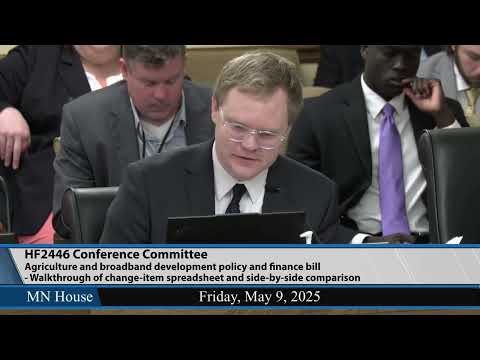
Committee hears agency priorities on food licensing, meat inspection and vet workforce as part of ag bill talks
Summary
Commissioner Tom Peterson and staff outlined agency priorities that appear in the Senate bill: food licensing modernization, meat and poultry inspection funding, cottage foods changes, and concerns about the large-animal veterinarian workforce. Members flagged a House rider allowing up to 10% admin costs for grants as a point for further review.
Minnesota Department of Agriculture Commissioner Tom Peterson told the Agriculture Conference Committee that both chambers include proposals to modernize food licensing, update grain-storage and grain-inspection fees, and increase meat and poultry inspection funding — priorities the department says would help regulated businesses and improve public protection.
Peterson said the department requests operating adjustments reflected in both bills and that the Senate package includes additional policy language intended to modernize licensing and inspection systems that “help our agency run better.” He noted the Senate carries a larger set of statutory modernization items while the House includes multiple grant programs and studies.
The Senate language includes updates to food licensing and cottage food rules that would, among other items, allow cottage food delivery via mail and establish a $30 annual registration fee for exempt cottage food sellers; staff said the Senate’s cottage food changes also create revenue to the cottage foods account but that one line in the spreadsheet showed expenditures that do not match the revenue amounts. Eric Olson noted the cottage foods revenue estimate of $716,000 in the first year of the change and said staff would answer questions on the revenue/expenditure mismatch.
Peterson also emphasized meat and poultry inspection funding, saying gaps in federal inspection grants have constrained state-inspected plants and that Minnesota has invested in state-inspected plants to keep processors operating. “We gotta always, work with that hand in hand,” he said, adding that without inspectors plants cannot run.
Several members raised workforce concerns tied to food and animal health: Senator Rick Hansen and others discussed the shortage of large-animal veterinarians in Greater Minnesota. Peterson and senators said loan forgiveness and other incentives are among the tools used to recruit veterinarians but noted other states are expanding such programs and that the state should monitor veterinarian availability given its role in sales barns, county fairs and animal health certification.
Senator Torrey Westrom and others questioned a House rider that would allow up to 10% of certain appropriations to be used for administrative costs, asking staff whether the 10% figure reflected a policy choice. Staff said the House included that language and that it had precedent in gubernatorial proposals.
Why it matters: food licensing and inspection functions affect food safety, market access for producers, and business regulatory burdens; veterinarian availability affects animal health oversight and the ability to certify animals for sale or exhibition. The committee did not act; members said they would continue to vet details, revenue estimates and administrative authority in later sessions.