Get Full Government Meeting Transcripts, Videos, & Alerts Forever!
Get email alerts on the Corrections topic
No spam. Unsubscribe anytime.
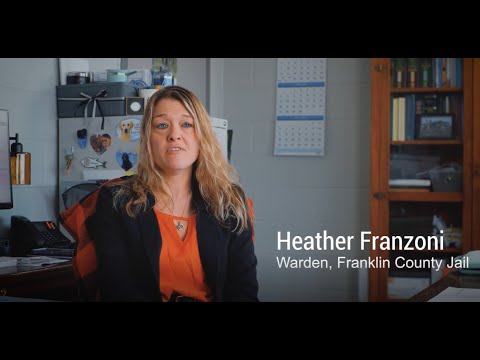
Franklin County Jail staff outline career ladders, training and reentry services
Summary
A Franklin County Jail staff member described career advancement paths, training programs, medication-assisted treatment and reentry support available at the jail, and noted employee benefits during remarks recorded in the meeting transcript.
A staff member at the Franklin County Jail described training, career-advancement paths and in-jail treatment programs that aim to connect people leaving custody with community services.
The staff member said the Franklin County Jail “offers so many different ways of advancement,” including career ladders in security and treatment, in-house instructor roles and certification opportunities for employees who enter with a high school diploma. “Full time employees are eligible for great benefits that include a great pension plan, paid holidays, paid time off, group health insurance, tuition reimbursement, and so much more,” the staff member said.
The presentation emphasized training and specialized roles as part of career progression. The speaker said they began as a correctional treatment specialist, were promoted to deputy warden of inmate custody, and were appointed warden in the summer of last year. They also described obtaining pre-hospital training and becoming an “international hostage negotiator,” which the speaker said helped them understand multiple jail departments and advance their career.
The staff member described in-jail treatment programming and post-release supports. “There’s MAT programs. There’s opportunities for individuals for that warm handoff to come to jail, get the services that they need, and then continue them in the community,” they said, adding that treatment staff facilitate evidence-based groups such as drug- and alcohol-related programs and cognitive-behavioral curricula (MRT). The speaker noted that COVID-19 changed some operations but said the jail now places greater emphasis on reentry and rehabilitation.
The remarks differentiated types of work inside the facility: informal counseling, crisis intervention and roles in the treatment department that can lead to supervisory positions. The staff member said the correctional treatment specialist position can “eventually become a supervisor and be some sort of director over different services within the treatment.”
No formal actions, votes or policy changes appear in the meeting transcript segment covering these remarks. The comments in the transcript describe current programs and employee benefits rather than proposed ordinances or budget actions.
Details not specified in the transcript include the exact size of the jail population served by these programs, precise funding sources for treatment or reentry work, and whether the described training and programs are new initiatives or expansions of existing services.