Get Full Government Meeting Transcripts, Videos, & Alerts Forever!
Get email alerts on the Criminal Justice Sentencing topic
No spam. Unsubscribe anytime.
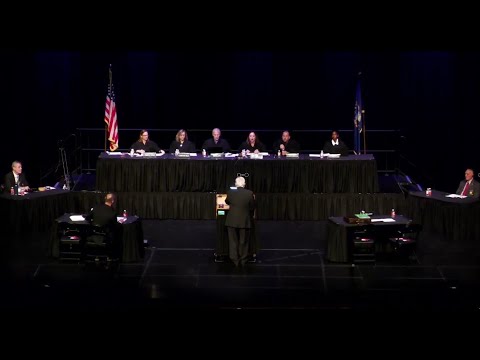
Michigan Supreme Court considers whether bringing meth into booking counts as conduct for OV 19
Summary
So calling docket number +1 66566, People of the State of Michigan v. Curtis Allen Morris: counsel for the appellant and the state argued about whether a defendant27s post-offense presence in the booking area with methamphetamine can be scored under offense variable (OV) 19, which applies when a defendant27s "conduct threatened the security of a penal institution."
So calling docket number +1 66566, People of the State of Michigan v. Curtis Allen Morris: counsel for the appellant and the state argued about whether a defendant27s post-offense presence in the booking area with methamphetamine can be scored under offense variable (OV) 19, which applies when a defendant27s "conduct threatened the security of a penal institution."
Charles Covello, attorney for the appellant, told the court that "the statute is to be given a reasonable and common sense reading" and urged that "conduct" requires voluntary action. Covello argued that because Morris was arrested, handcuffed and brought to the jail involuntarily, any methamphetamine found on or falling from his person during booking was not voluntary conduct and therefore should not support OV 19 scoring.
The state27s attorney, Zachary Stempian, argued the OV 19 score was proper. "OV 19 was properly scored in consideration of the purpose of the offense variables and the facts of this case," Stempian said, adding that the guidelines permit consideration of post-offense conduct and that methamphetamine is a particularly dangerous controlled substance. "Methamphetamine is one of the most dangerous drugs that we have on the streets currently," Stempian said, arguing the drug can cause "erratic behavior" that can threaten safety in a jail.
The justices pressed both sides on three recurring issues: (1) the statutory meaning of "conduct" for OV 19; (2) whether processing or booking is part of the "jail" for purposes of the variable; and (3) whether certain controlled substances are inherently dangerous enough to trigger OV 19 even if discovered only in the booking area. One justice asked, "Would you agree that there are circumstances where someone is in the booking area and it could be a threat to a penal institution?" Counsel agreed certain items (the justice suggested anthrax as an extreme example) would present a threat, but disagreed about routine drugs.
Covello emphasized a line-drawing based on voluntariness: he said a reasonable, common-sense reading of "conduct" requires deliberate action and therefore the routine circumstance of an arrestee being brought in involuntarily should not be scored. Stempian responded that OV 19 commonly contemplates post-offense conduct and that the sentencing guidelines are meant to capture such conduct to promote uniformity. He acknowledged there are scenarios where disclosure at booking ("I have methamphetamine on me") would mitigate scoring: "I 100% agree to that," he said, describing a sentencing he had handled where OV 19 was not scored after disclosure.
The attorneys and justices also discussed practical effects. Counsel for the state warned that a rule forbidding OV 19 points whenever a defendant did not have a prior opportunity to divest himself could discourage proper searches or encourage risky conduct. Counsel for the defense cautioned that treating routine possession discovered only after arrest as conduct would create a broad exception for most detainees who arrive involuntarily.
The bench and counsel referenced Michigan precedent and the statutory framework in argument, including citations to People v. Dixon and People v. Smith and discussion of MCL 777.34 and the sentencing guidelines. The hearing concluded when the court announced, "Case will be submitted."