Get Full Government Meeting Transcripts, Videos, & Alerts Forever!
Get email alerts on the Education Technology topic
No spam. Unsubscribe anytime.
Show Low school board previews draft AI policy; task force recommends approved tools, will return for adoption
Summary
A staff-led task force presented a 12-page draft “ethical AI use” policy and a recommended list of approved tools; the board was told the policy will return next month for formal approval and will be inserted into student handbooks after adoption.
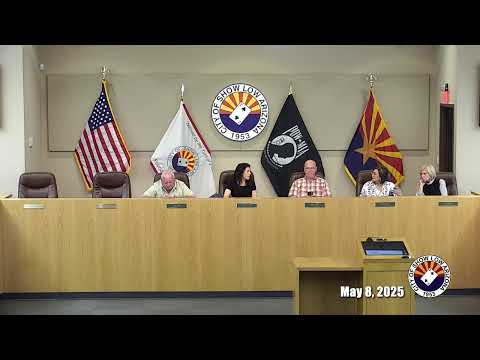
The Show Low Unified School District’s AI task force presented a draft Ethical Artificial Intelligence Use Policy to the school board at its May regular meeting, outlining approved tools, privacy safeguards and next steps for district implementation.
The draft policy, produced by a committee of teachers, administrators and the district director of technology, says AI should be used to “improve teaching and learning” and not to replace professional judgment. The task force recommended an initial list of approved tools — ChatGPT, Conmigo, Magic School AI, Gemini, Diffid and Canva — and proposed embedding AI-use agreements and signature pages in student and family handbooks after board adoption.
The committee said it reviewed guidance from Northern Arizona University’s generative AI guidelines, surveyed teachers about current classroom use, and worked with the Arizona Department of Education and Khan Academy in developing the document. Clayton Winnett, introduced in the meeting as “assistant principal at the high school,” and Amelia Savage, who co-led the task force, told the board the policy addresses academic integrity, privacy and fairness and includes separate guidance for students, teachers and administrators.
The draft explicitly notes compliance checks for federal and state education/privacy laws and standards cited by the committee. At the meeting the presenters said the policy was written with FERPA, COPPA, CIPA and PPRA considerations in mind and that the committee vetted commonly used classroom tools for compliance before recommending them for district use.
Board members and presenters discussed timelines and family engagement. The policy will return to the board next month as an action item; presenters said, if adopted, the district will require family and student signatures on the policy page and incorporate it into handbooks for elementary, junior high and high school. Presenters described the draft as a “living document” that would be updated as new tools and risks emerge.
The board did not vote on the policy at the meeting. Presenters invited trustees to submit feedback to the committee before the formal adoption vote.
The district plans training and an approved-tools list that staff can use day to day; the committee recommended teacher training on AI classroom use, explicit language about permitted tools for students and procedures to protect student data when using vendor platforms.