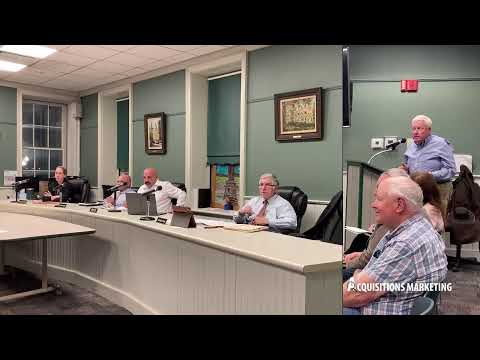
Town attorney presents draft prohibiting short-term rentals; public split between prohibition and regulated-permit approach
Loading...
Summary
Town Attorney Rory Brady presented a draft local law May 8 that would prohibit use of any dwelling unit as a short-term rental and set presumptions and fines for enforcement; public comment was sharply divided over prohibition versus regulated permitting.
The Town of Goshen Town Board continued the public hearing on a proposed local law to prohibit use of dwelling units as short-term rental property and reviewed a draft prepared by the town attorney.
Town Attorney Rory Brady presented the draft law and said it adds a single definition to the town code: a short-term rental is “any portion of real property rented for compensation in exchange for lodging for a period of not more than 31 consecutive days.” Brady explained the draft also establishes a set of "presumptions" (indicia) that a dwelling unit is being used as an STR, a prosecutorial/notice path that leads directly to appearance tickets under the town code, and escalating fines to encourage compliance. He said the draft implements a prohibition across all zoning districts rather than a permit system; he also said the board could consider permitting or regulating in the future if the board directed him to pursue that alternative.
During the public comment period, residents split in their views. - Support for prohibition: Several residents described ongoing neighborhood problems they attributed to absentee landlords and short-term rentals and urged a strong deterrent. Commenters asked for clear enforcement teeth; some recounted past incidents and stressed that quick, enforceable remedies were needed. - Requests to regulate rather than ban: Other speakers urged the town to consider regulated permitting rather than an outright ban. Those commenters argued that owner-occupied, inspected short-term rentals (for example, bed-and-breakfasts and owner-occupied listings) cause fewer problems and can be managed through registration, inspection, limits on occupancy or host-on-premises requirements.
Several commenters asked about specific provisions and how the law would be enforced: whether a complaint form would be required, how many repeat nuisance calls would trigger enforcement, and how the town would identify property owners. The attorney and multiple board members said enforcement would rely on the code-enforcement office to investigate complaints, rely on the listed presumptions as evidence, and issue appearance tickets that move the matter directly to court; the draft includes fines and, in severe cases, imprisonment as a rarely used sanction.
Attorney Brady read the draft definition into the record: “Any portion of real property rented for compensation in exchange for lodging for a period of not more than 31 consecutive days.” He noted the definition specifically excludes bed-and-breakfasts, boarding/rooming houses, hotels and month-to-month tenancies and said the 31-day threshold mirrors the state definition used for short-term lodging.
The board did not close the public hearing on the short-term rental draft that night; the attorney said he will consider edits the board requests and return with a revised text. Several board members asked staff to prepare a consolidated, plain-language version showing inserted code text and how enforcement would be implemented before the next hearing.
The public hearing was continued; no final vote on the short-term rental prohibition occurred on May 8.