Get Full Government Meeting Transcripts, Videos, & Alerts Forever!
Get email alerts on the Facilities Cip topic
No spam. Unsubscribe anytime.
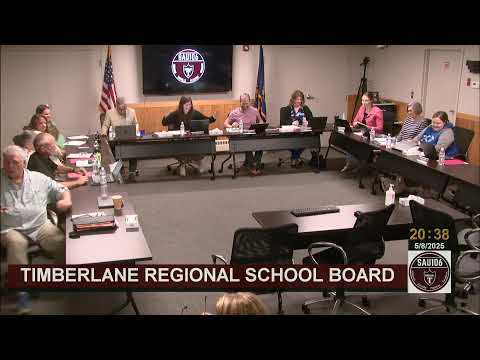
Timberlane board directs RFP for high school bathroom redesign after months of student complaints
Summary
The Timberlane Regional School District board voted to advertise an RFP to hire an architect/engineer to design renovations to high‑school restrooms, a project administrators and students said is needed for privacy and safety.
The Timberlane Regional School District Board of Trustees voted to direct the superintendent to issue a request for proposals to select an architect/engineer to design renovations to high‑school bathrooms, board members and administrators said Thursday evening.
Board members said the decision responds to repeated student complaints and a facilities assessment that showed the high‑school restrooms are worn, lack privacy and have contributed to loitering and safety concerns. Principal John Becker and Assistant Principal Tim Brown told trustees that students and staff have pushed for single‑stall restroom designs to improve privacy and safety.
Becker said students have been “large advocates” for the work for six to seven years and cited a climate and culture survey in which students and staff overwhelmingly endorsed single stalls. “Using the restroom is a private activity. People want privacy when they’re using the restroom,” Becker said. Assistant Principal Tim Brown added that single stalls would “alleviate a lot of concerns” and make students “feel extremely comfortable.”
Administrators presented two procurement paths: (1) hire an architect/engineer first to produce full specifications, permitting and mechanical/electrical/plumbing design, then bid the construction; or (2) hire a design‑build general contractor to deliver the project in one procurement. Board discussion emphasized independent design oversight. Trustee Jack argued for selecting an architect first so the district retains an independent party to produce plans and then bid to multiple contractors. “You want the architect independent of the general contractor because the architect makes sure everything in his drawings gets done to specifications,” Jack said.
Superintendent and facilities staff told the board the district currently has a $500,000 placeholder in the capital improvement plan for initial bathroom work at the high school’s 200 wing and that the CIP line for bathroom projects has been discussed at $2 million over multiple years. Administrators cautioned that industry standard practice would allocate roughly 10 percent of a project budget to architectural and design work and that plumbing, mechanical and electrical design are separate cost centers. They also noted permitting fees from the Plaistow building department and other predictable project costs.
After discussion, the board voted to direct the superintendent to issue an RFP to select an architect/engineer; trustees said the RFP should allow interview of finalists and invite alternates and staged options so the district can consider cost‑saving variants. The motion was made by Jack and seconded; the vote passed. The board asked the facilities committee to help shape scope and to consider whether to phase work across multiple bathrooms for economy of scale.
The decision does not itself appropriate construction funds. Board members said the architect selection will define a firm cost estimate and a recommended scope for any future appropriation or phased work. Administrators said they will return with proposed RFP language and options for the board to review.
The school administration emphasized timeline questions: an architect‑driven approach will take longer to reach construction but is intended to produce detailed, competitively bid contracts; a design‑build route could compress the schedule but may limit independent checks. Trustees said they preferred the architect‑first approach to protect the district’s interests and to develop a comprehensive plan for multiple bathrooms rather than a piecemeal fix.
The board did not set a firm dollar appropriation at the meeting but discussed the CIP’s available funding and asked staff to clarify budget totals and possible staging options in follow‑up materials.