Get Full Government Meeting Transcripts, Videos, & Alerts Forever!
Get email alerts on the Public Comment Decorum topic
No spam. Unsubscribe anytime.
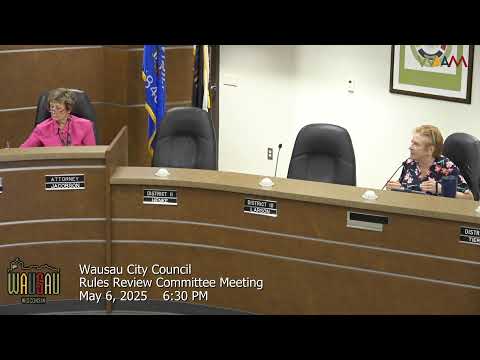
Wausau committee to draft brief decorum statement; declines immediate council signage ban
Summary
Public commenter urged caution before adopting decorum language modeled on Yacolt, Washington, and asked the committee to consult legal experts. Committee members agreed to craft a concise decorum statement for agendas and declined to adopt a sign ban at this time pending legal review.
Tom Killian, a resident who addressed the committee during public comment, urged caution in adopting decorum language modeled on Yacolt, Washington, and recommended the committee consult free-speech experts before adopting rules that could limit public comments.
Killian told the committee, "Wausau should strive to be a shining example in terms of civic best practices and protecting residents' rights..." He pointed to a 2011 decorum example in the packet from Yacolt, Washington, and said the town had been the subject of press coverage and litigation over efforts to curtail speech. Killian also cited a federal appeals-court decision in October 2024 that struck down a school board's public-comment restrictions as applied and said the rules recently struck down "look a lot like the ones proposed for Wausau in your packet." He suggested the committee consult organizations such as the ACLU Foundation for Individual Rights and Expression and the Institute for Justice for best practices on constitutional speech rights.
Committee members discussed three related items on the agenda: whether to restrict signage during meetings, whether to adopt a short decorum statement to be read before public comment, and whether to attach a mission/core-values statement to agendas. Several council members said signage appears protected by the First Amendment unless it is disruptive or dangerous; the committee did not direct staff to draft a ban on signs. Rather, members expressed a preference for a concise, plain-language statement to be displayed or read before public comment that reminds speakers to address the chair and avoid disruptive or threatening language.
The city attorney cautioned that legal research would be required to craft enforceable rules and that staff would provide legal options if the committee asked for them. The committee asked staff to produce a streamlined decorum statement and to return revised wording at the next Rules Review Committee meeting.