Get Full Government Meeting Transcripts, Videos, & Alerts Forever!
Get email alerts on the Unmanned Aerial Systems topic
No spam. Unsubscribe anytime.
Witness warns Michigan risks falling behind on drones, urges investment in domestic UAS and countermeasures
Summary
At a House Oversight Committee hearing, Dakota Greenman of Westwood AI described commercial and national-security uses of drones, supply-chain vulnerabilities tied to foreign manufacturers, and gaps in counter-UAS capability; committee approved minutes by unanimous consent.
Dakota Greenman, founder and CEO of Westwood AI, told the Michigan House Oversight Committee on Homeland Security and Foreign Influence that the rapid rise of unmanned aerial systems (UAS) presents both commercial opportunity and national-security risk and urged state and federal action to foster domestic innovation and counter-UAS capability.
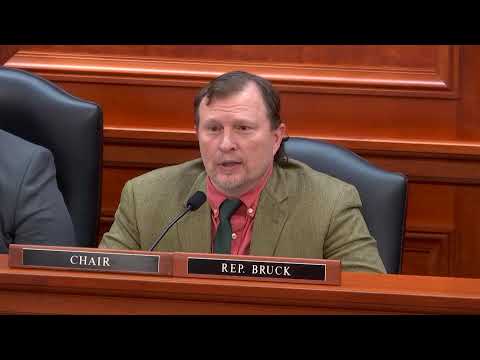
"Drones are not tools. They're a force multiplier, providing critical advantages in agriculture, logistics, public safety, and national defense," Greenman said during testimony to the committee chaired by Representative Brock.
Greenman, a former U.S. Air Force senior intelligence analyst, described work his firm has done with federal agencies and the Michigan Air National Guard and said Westwood AI has supported UAS applications ranging from criminal-history reporting and police intelligence databases to commercial inspections. He said the state already has a growing technology ecosystem but that the United States risks falling behind overseas without coordinated investment and regulatory modernization.
Why it matters: Committee members pressed Greenman on vulnerabilities and on whether Michigan has the industrial base to retain talent. Greenman warned that reliance on foreign-built drones and supply chains creates security and operational risks, and he urged policies and funding that would support small-business innovation and domestic manufacturing of key components, especially batteries.
Key points from Greenman's testimony:
- Market and scale: Greenman cited industry growth projections and said recent estimates show roughly 900,000 FAA-registered drones nationwide (about 340,000 commercial and 500,000 recreational), while noting additional off-the-shelf devices are not counted in those figures.
- Supply-chain risk: He described an October 10, 2024, disruption in which sanctions and export restrictions affected Skydio's battery supply and said such events underscore U.S. dependence on foreign components for batteries and sensors.
- Manufacturer control and firmware: Greenman described concerns tied to firmware updates, geofencing and remote features in drones made by foreign manufacturers, and said some vendors include an emergency protocol that can disable aircraft remotely.
- Law enforcement use of foreign platforms: Greenman said "the latest statistic that we were able to find is that 70% of the national law enforcement is currently utilizing DJI drones," framing that as a short-term dependency concern.
- Counter-UAS gaps: He and committee members discussed limitations of existing countermeasures. Greenman criticized handheld "anti-drone" rifles for failing against fast FPV drones and warned there is no proven, practical mesh-network defense that covers the full portfolio of piloted, automated and swarm threats.
- Sensors and payloads: Greenman demonstrated commercial scanning technology and explained sensors often mounted on UAS, including EO (electro-optical) cameras, thermal imagers, LIDAR, harmonic identification and electronic-intelligence (ELINT) payloads, and noted how combinations of sensors can reveal structural weaknesses or collect electronic and environmental data.
Committee exchange and next steps: Representatives asked about Arctic operations and extreme-weather performance, hydrogen fuel-cell batteries, and whether the company's systems use facial recognition; Greenman said his company's systems do not perform facial recognition and that battery and environmental-performance tradeoffs remain an industry hurdle. Multiple committee members asked how Michigan and its military installations could better employ counter-UAS measures; Greenman said federal and FAA regulations limit what bases can do locally and recommended legislative and funding approaches to empower installations to collect information and field countermeasures.
Chair Brock said the committee will continue the topic and post Greenman's slide deck and video on the committee website. The hearing concluded with routine business: Representative Minster moved to approve the April 30 minutes; the committee approved the minutes by unanimous consent.
Ending: The committee scheduled further testimony on drones and cybersecurity over the coming months and signaled interest in follow-up sessions focused on counter-UAS options, workforce retention and funding mechanisms for small innovators. Greenman said Westwood AI is developing a regional drone center intended to retain technical talent in West Michigan and to serve as an incubator for low-cost, problem-focused solutions.