Get Full Government Meeting Transcripts, Videos, & Alerts Forever!
Get email alerts on the Public Transit topic
No spam. Unsubscribe anytime.
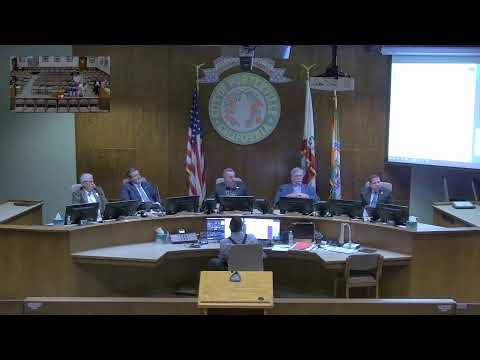
Porterville council backs phased change to transit service, shifts low‑ridership riders toward on‑demand transport
Summary
After a public hearing with more than a dozen riders and transit employees speaking, the Porterville City Council selected a phased plan to address a roughly $1.2 million transit funding shortfall by reducing underperforming fixed routes and expanding use of the city's on‑demand service.
Porterville City Council voted to pursue a phased change to public transit that will remove or consolidate low‑ridership fixed routes and shift some service to the city's on‑demand "transport" program as staff and riders warned of a roughly $1.2 million funding shortfall.
The council's action follows a staff presentation that outlined three options and urged a middle path to preserve access while reducing operating costs. Director of Transportation Tree said the city faces an "anticipated $1,200,000 reduction in combined Federal Transit Administration ... and Local Transportation Fund allocations" and presented three alternatives that traded savings against coverage. Staff recommended Option 1, a phased transition away from Routes 4 and 6, reduced Saturday hours and a new Saturday shuttle for the swap meet, with affected riders served by transport.
Why it matters: council members and many public commenters said the city must close a sizable funding gap while trying to avoid cutting travel for students, seniors and patients who rely on buses. Riders and college students testified that Routes 4 and 6 connect Porterville College, elementary and middle schools, clinics and other trip generators and that moving those riders fully to on‑demand service would raise cost or reduce reliability for people who lack other options.
Fixed route services account for the largest share of the transit budget; staff said fixed routes represent roughly 68 percent of operating costs with an average of 15.5 passengers per vehicle hour and a cost around $8.90 per ride. Transport operates with higher passenger satisfaction and faster travel times but much higher cost per trip (around $54 per trip and about 3.1 passengers per hour). Staff projected Option 1 would save roughly $1.4 million annually; Option 2 about $1.2 million and Option 3 about $1.6 million, the latter consolidating the two routes and eliminating transport.
During the public hearing more than a dozen riders, students and a transport driver urged the council to preserve Routes 4 and 6 or to guarantee reliable alternative service. "Low ridership does not equal low need," said Alexis Diaz, a college employee and former student, who described Route 4 as "a lifeline for many students, staff and community members year round." Veronica Garza, a transport driver, said transport is popular and that software improvements could raise vehicle productivity.
Council discussion focused on balancing efficiency and equity. Council Member Beltran proposed combining Routes 4 and 6 into a single restructured fixed route (reducing frequency but preserving a direct option) and applying other Option 1 measures; Vice Mayor McCurvey described Option 1 as "the middle ground" that minimizes disruption while preserving critical access. The council asked staff to continue talks with Porterville College and Family Health Care Network about partnerships and targeted service for low‑income riders.
Outcome and next steps: Council voted to adopt the staff recommendation (Option 1) and directed staff to implement the phased changes, monitor results, and report back. Staff will also continue to pursue outreach and partnerships with Porterville College and Family Health Care Network to preserve critical trips and explore software and operational improvements for transport. Councilmembers said the changes will be monitored and adjusted as needed.
The council's motion followed a lengthy public hearing in which riders described how transit affects education, health care and work; the city will begin phased changes and provide regular financial and operational updates to the council while pursuing partnerships to mitigate impacts.