Get Full Government Meeting Transcripts, Videos, & Alerts Forever!
Get email alerts on the Municipal Budget topic
No spam. Unsubscribe anytime.
Long Beach holds public hearing on $108 million fiscal 2025–26 budget; council debates use of reserves and tax increase
Summary
City Manager Dan Creighton and City Controller Ina Rasnick presented a proposed $108 million fiscal 202526ndash;26 budget at a May 6 public hearing; the plan keeps the city under New York States tax cap while using $2.7 million of fund balance as a conservative contingency, prompting council and public debate over whether to tap reserves or raise taxes.
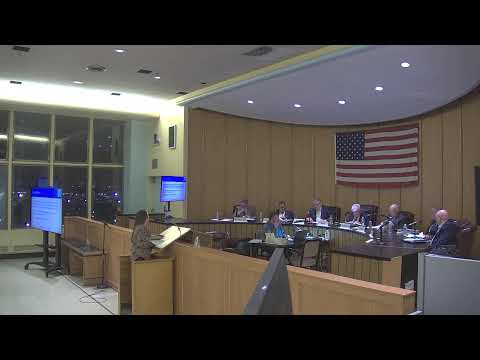
City Manager Dan Creighton and City Controller Ina Rasnick presented a proposed $108 million fiscal 202526ndash;26 budget at a May 6 public hearing of the Council of the City of Long Beach, outlining a plan that the administration says keeps the city inside the New York State tax cap while using $2.7 million of unassigned fund balance.
The budget matters because it proposes a net increase in city expenditures of roughly $4 million (about 3.8 percent) driven by higher personnel and benefit costs, including pension and health insurance increases, a roughly $750,000 rise in property insurance and higher interfund transfers. The administration said those pressures, together with the loss of a roughly $2.5 million grant the city received in a prior year, create a shortfall the budget covers partly with the tax levy and partly with the fund balance.
"Were being conservative," City Manager Dan Creighton told the council and public, noting the budget is designed to maintain current service levels while leaving money in reserves for unexpected events. "The main thing for the next slide, I want to just point out, the main thing we try to accomplish for the city is to make sure that everybody's getting the services that they used to." City Controller Ina Rasnick said the administration prepared what it called a balanced budget and said improved reserve levels and stronger credit ratings have helped borrowing costs over recent years.
The proposal would keep the citys tax levy increase beneath the formal tax-cap calculation but, after accounting for exclusions the state allows, the administration said the levy change equates to about $126 per median household (they reported the median assessed house value used in the calculation as about $921,000). The council and public debated two different approaches: raise the levy higher now to avoid drawing reserves, or keep the levy nearer the tax-cap number and plan to use up to $2.7 million of fund balance as a conservative fallback.
"We're taking the most conservative approach," Ina Rasnick told the meeting. "We don't take credit for changes that we implement until we prove they work," she said, referring to anticipated revenue improvements from Beach Park operations and other initiatives the administration said it expects to realize.
Opponents in public comment and on the council said the move to use fund balance risks future credit pressure or larger increases if projections fail to materialize. Resident Ron Paganini told the council he wants overtime and hours reductions pursued to conserve money. "The first thing to go is the overtime," he said. Long-time resident Eileen Hession said reserves are intended for emergencies and questioned repeated expectations that beach revenues will rise each summer.
Council members pressed for clarity on specific drivers of the increases. The administration supplied several figures during the hearing: a projected $3 million increase in property-tax receipts (about half from a higher tax rate and half from new development), $1.6 million in higher employee-benefits costs (pensions and health), $19 million in interfund transfers (including roughly $5 million tied to long-term debt labeled "Hebron"), and an estimated $4.5 million of budgetary pressure to be covered through a mix of the levy, fund balance and other revenues. The City Controller said water rates are proposed to rise by 13 percent to stabilize the water fund; sewer rates would remain unchanged for now.
Council debate focused on two competing philosophies: (1) present a budget that fully folds expected new revenues into the levy now, producing a higher tax increase but using fewer reserves; or (2) present a conservative revenue estimate, keep the levy nearer the tax cap, and show the $2.7 million use of fund balance as contingency that the administration hopes not to tap. Council member John (first-name-only in the record) argued that relying on reserves to lower the levy creates a future hole and risks credit downgrades; others said the conservative approach motivates the administration to execute revenue-generating projects.
The hearing also included a presentation of an ongoing, related capital issue: the sewer-consolidation project. Assistant Corporation Counsel and county public-works representatives described a dispute with FEMA over whether roughly $5 million previously spent to restore plant operations after Superstorm Sandy duplicates later federally funded work. The council authorized a short-term transfer of city sewer funds to pay contractors while the city and county pursue reimbursement from federal and state partners; the administration said the intermunicipal agreement includes mechanisms to repay the city from future sewer rents if federal re-obligation is delayed.
Votes at a glance: the council moved a block vote on several non-budget agenda items and approved them unanimously during the same meeting. Items approved in block (items 1, 410) included: (1) a resolution fixing dates for the 2025 Ocean Beach Park season; (4) purchase of automotive batteries from the lowest responsible bidders; (5) acceptance of a charitable donation of lifeguard shirts from Mount Sinai South Nassau; (6) a contract for the July 4 fireworks display; (79) publication for hearing of water, sewer and building-code amendments (publication only; hearings scheduled May 20 and June 3); and (10) a transfer of sewer funds to cover contractor payments while FEMA/state reimbursements are pursued. The block motion passed with a recorded yes vote by five council members (Bendo, Lester, Reinhart, Vice President Miyamura and President Finn).
What's next: this public hearing remains open; the administration said written public comment will be accepted through May 20 and a final council vote on the budget will occur by May 27 (the administration noted a special meeting may be used to finalize the levy). Several council members urged follow-up working sessions to examine reserve levels, anticipated contract settlements (CSEA and firefighters), and the city's assumptions about beach and other departmental revenue.
The budget presentation and the public record are posted on the city's website; the council scheduled additional hearings and opportunities for public comment before a final vote.