Get Full Government Meeting Transcripts, Videos, & Alerts Forever!
Get email alerts on the Land Use Zoning topic
No spam. Unsubscribe anytime.
Council delays final action on HB443 zoning text amendment after hours of public comment
Summary
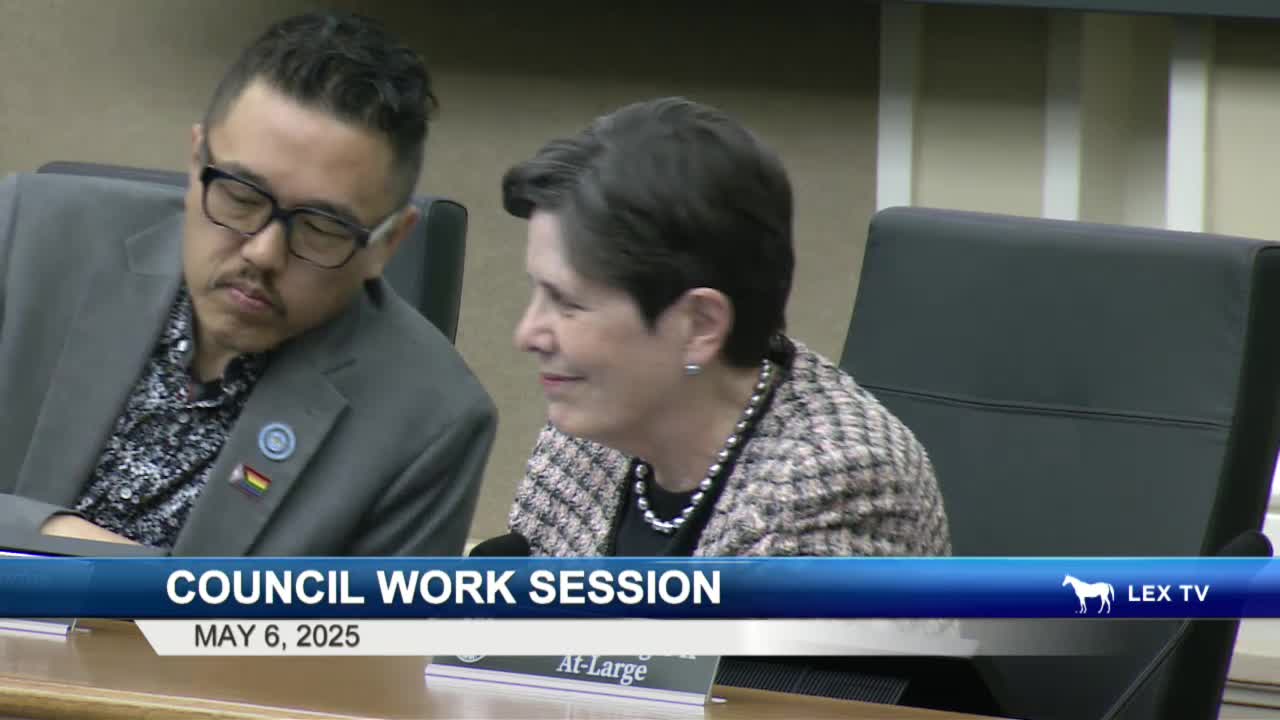
After more than an hour of public comment and debate, the Lexington-Fayette Urban County Council voted to remove the HB443 zoning ordinance text amendment (ZOTA) from the current docket for further work and discussion at a May 13 work session; council also approved a narrow amendment removing the word “temporary” from a definition.
The Lexington-Fayette Urban County Council paused formal action on a zoning ordinance text amendment linked to 2024’s House Bill 443 after a prolonged public-comment period and questions from council members about notice, public engagement and how the state law changes local review procedures.
Public concerns raised at the work session centered on whether the local ZOTA would reduce opportunities for neighborhood input on final development plans, allow broad ministerial review without hearings, and increase development costs through new objective standards. Dozens of residents, neighborhood leaders, and business representatives addressed the council during the meeting’s public-comment period.
Commerce Lexington board chair Carla Blanton urged caution and asked the council not to fast-track broad regulatory changes. ‘‘Higher costs equal less infill and redevelopment,’’ Blanton said, arguing the proposal could lengthen and raise the cost of projects the city wants to encourage.
Neighborhood representatives and advocates said the proposal could curtail meaningful review. Patty Dross of the Joyland Neighborhood Association warned that a ministerial-only process could leave residents unaware of projects until construction had started: “If the correct zone is present for a proposed project, … we will not know until the shovels are digging what is being built,” she said.
Retail and business stakeholders raised separate concerns about specific regulations. Shannon Stiglitz, a retailers’ representative, said provisions limiting drive-throughs and prescribing building entries could pose public-safety and merchandising challenges and urged the council to preserve appropriate public input and process.
Legal and technical points Attorney Richard Murphy, representing several developers, told the council that the draft ZOTA requires notice for waivers and that the changes reflect state law distinctions between discretionary zone changes and ministerial development standards. Representative Brown, a member of Lexington’s state delegation who joined the meeting, said he voted for HB443 in the legislature and told council members he did not intend for the state bill to remove public engagement. He said he had not communicated with local government staff before the vote.
Planning staff described the local drafting work as partly ‘‘cleanup’’ and partly new text required to translate previously subjective standards into objective, numeric standards that comply with the statutory language. Planning staff said the largest amount of new text is concentrated in Article 16 (vehicle and access standards) where traffic, drive‑through and access standards must be converted from sign‑offs to measurable requirements.
Council action and next steps Council member Brown moved to table the current docket motion so the council could hear the remaining public commenters and that motion passed. Later in the meeting, Council member Reynolds moved to remove item 7 (ordinances, first reading) from the current docket and to suspend the rules to allow continued discussion at a work session on May 13; that motion passed. The council also approved, by separate motion, an amendment removing the word “temporary” from the ordinance’s definition section (motion by Council member Brown, seconded by Council member Baxter).
Why it matters House Bill 443 requires local governments to apply objective standards ministerially in certain parts of the development review process; how Lexington defines those objective standards and preserves opportunities for neighborhood review will change whether some final development plans are handled administratively or continue to require public hearings at the Planning Commission. Several speakers said the proposed text shifts too much discretion to staff and adds new technical requirements that could make infill redevelopment more costly.
Council members requested additional time and work with staff to reconcile objectives, clarify notice and waiver rules, and make targeted edits. The council voted to continue discussion at a May 13 work session; staff indicated they will bring refined language and that technical review meetings will be streamed going forward.
— Reporting from the Lexington-Fayette Urban County Council work session