Get Full Government Meeting Transcripts, Videos, & Alerts Forever!
Get email alerts on the Zoning Special Use topic
No spam. Unsubscribe anytime.
Richmond planning commission continues special‑use request for 3122 Second Avenue after heated neighborhood opposition
Summary
The commission continued consideration of a special‑use permit for redevelopment at 3122 Second Avenue after residents raised safety, density and outreach concerns. The applicant declined to modify the plan; the case was continued to June 3 at the applicant's offer to meet the neighborhood.
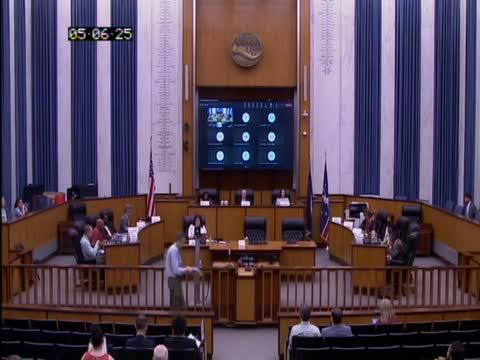
The Richmond Planning Commission on Tuesday voted to continue consideration of a special‑use permit for 3122 Second Avenue after residents and several commissioners raised concerns about density, safety and lack of community outreach.
The proposal would reconfigure a 14,700‑square‑foot lot in the North Highland Park neighborhood to create up to three single‑family detached homes and two single‑family attached (duplex) homes, while retaining the existing single‑family dwelling. David Watson, city staff presenting the case, described the site, underlying R‑6 zoning and the reasons the developer requested a special‑use permit related to lot area and lot width requirements.
Residents pressed the commission in a public hearing. “This proposed shift to a high density, large‑scale development is simply not in line with the character or capacity of this block,” said Kaylee Glass, a neighbor at 3125 Second Avenue. Several speakers cited recent nearby developments, on‑street parking pressure, crime and a recent shooting near the block to argue the area cannot absorb additional units. Tamara Barker and Darian Sistrunk, neighbors who also spoke in opposition, said the property has been poorly maintained for years and said they fear quick build‑and‑flip projects that leave long‑term maintenance problems.
The property owner, who identified himself as the owner but did not provide a full name during the hearing, told the commission he had purchased the lot around late 2022 or early 2023 and that he intends to develop and maintain the buildings. Asked whether he would remove the two rear lots to reduce density, he said, “I will not.” He later agreed to meet neighbors and said he would “reach out to the community” before the next hearing.
Commissioners expressed frustration that neighborhood outreach had not occurred before the hearing. Commissioner Pennock asked whether the applicant would reconsider the layout; when told the owner was unwilling to alter the proposal, commissioners moved to give the applicant time to meet neighbors. The commission approved a motion to continue the item to the June 3 meeting of the Planning Commission to allow the applicant to meet with the neighborhood and provide additional information.
The continuation was unanimous. The motion to continue was made and seconded on the floor and carried by roll call vote of all commissioners present.
If the applicant returns without evidence of neighborhood outreach, one commissioner warned the body would consider denial on return.
Clarifying details provided at the hearing included the owner’s statement that he purchased the parcel around late 2022/early 2023 and the staff note that the site is designated Neighborhood Mixed Use in the Richmond 300 master plan. Staff reported one email of formal objection had been received in advance of the meeting.
The case will return to the commission on June 3; the owner said he could accept a four‑week continuance to meet with neighbors before the commission reconvenes.