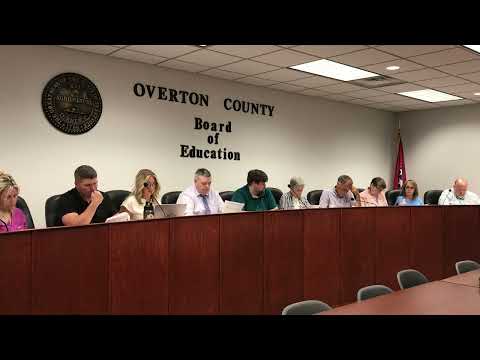
Overton County work session confronts $1 million shortfall; director raise and staff cuts discussed
Loading...
Summary
Board members at an Overton County school board work session reviewed a roughly $1 million budget gap tied to lost COVID-era funds and declining enrollment, and discussed options including retirements, a buyout offer, changes to pay scales and a proposed director contract increase.
At a work session, members of the Overton County school board discussed a projected budget shortfall of about $1,000,000 driven by the end of federal COVID-era (ESSER) funding and a drop in enrollment.
The board reviewed a draft two-year employment contract for the district director that includes updated end dates and probationary language; the director's proposed compensation increase was discussed in the context of the larger budget gap. Unnamed Board Member (Speaker 1) said, “We've lost 40 from last year to this time,” linking lower student counts to an estimated $400,000 revenue loss.
Why it matters: the district must balance staff pay, program support and legally required expenses while enrollment- and grant-driven revenues decline. Board members spent the session weighing personnel and operating options that would reduce expenditures without violating pay-scale minimums the group said the state requires.
Budget drivers and shortfall Most of the board's discussion centered on three factors the meeting identified as the primary drivers of the gap: the expiration of ESSER/COVID funding, a loss of about 40 students compared with last year, and ongoing fixed costs such as utilities and debt service. The board discussed a $230,000–$250,000 projected cost for after-school programming next year and noted special-education services still impose local costs despite federal funding.
Board members reviewed revenue and debt items: the group said one loan payment concluded this year, producing an estimated $200,000 annual savings on debt service, but that the saved amount is restricted to debt-service budgeting and cannot be repurposed to cover operating shortfalls.
Personnel and pay-scale proposals The board discussed a range of staffing options to close the gap, including retirements, resignations and voluntary buyouts. Unnamed Board Member (Speaker 1) and others said they expect some retirements and that the administration is planning to absorb 13 positions in the budget as of the draft discussed.
To preserve raises while lowering cost, staff described a plan that would increase the teacher baseline by $2,500 for some staff and provide more modest increases (for example $1,000) for others; the presenters estimated the combination of those changes and a 50¢–$1.00 increase for support staff would yield about $396,000 in savings and move the district roughly halfway to closing the shortfall. The presenters stressed that state minimums on pay scales constrain how selectively the district can apply raises.
Insurance, fees and other options Board members debated shifting some insurance costs to employees; one board member noted that charging a 20% employee contribution for insurance would, in the presenters’ estimate, cover the entire deficit, but several members said they did not favor that option. The group also discussed whether local option sales tax growth or a wheel-tax allocation could change revenue projections, and asked staff to confirm how county distributions of local-option revenue have been treated in prior years.
Administrative items: director contract and evaluations The board reviewed an updated draft of the director's two-year contract, noting a change that restores probationary-period language to match the previously signed version. The draft will be revised to correct an end-date that erroneously read 2029 and redistributed in the board packet before the next public meeting; the board will vote on the final contract at the next meeting.
The board also discussed the schedule and instrument for director evaluations. Staff said they will distribute supervisor evaluation materials in December so responses can be returned in time for the March evaluation and April review. A board member described using an electronic instrument that would report percentage responses on a 1–4 scale; the board confirmed the intent to include central-office staff and supervisors in the process next year.
Other operating concerns Members questioned several large line items, including a $55,000 phones allocation and a roughly $600,000 electricity projection. Legal services were also highlighted; staff said the current budgeted amount for outside counsel (listed as $30,000) has already been exceeded this year and staff expect to prepare a budget memo to address that overrun.
Next steps No formal actions or votes were taken during the work session. Staff were asked to return revised contract language and detailed budget figures, including exact counts of teachers and students, estimates for potential retirements and a precise tally of current legal-service expenditures. The board scheduled the contract vote and further budget review for a future meeting.
Ending Board members closed the session directing staff to continue identifying cuts and to provide the corrected contract and updated budget figures ahead of the next public meeting.