Get Full Government Meeting Transcripts, Videos, & Alerts Forever!
Get email alerts on the Harm Reduction topic
No spam. Unsubscribe anytime.
Council presses departments on syringe-exchange funding cuts; health officials say HIV rates have not spiked, provide syringe-collection data
Summary
After council reduced syringe-exchange funding in FY25, members asked whether city surveillance shows increases in HIV or hepatitis C. Health officials said rates have not spiked and provided a recent syringe-collection total for the quarter.
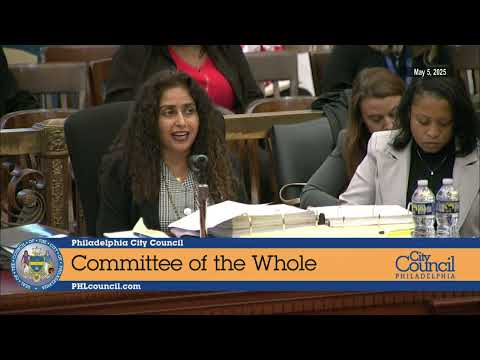
Philadelphia — Council members pressed city health officials about the consequences of reduced municipal funding for syringe-exchange programs and asked whether public-health surveillance has recorded a spike in HIV or other blood-borne infections.
Donna Bailey, CEO of Community Behavioral Health, and Health Commissioner Dr. Palak Veil Nelson said the agencies are monitoring disease rates closely and are pursuing alternative funding paths. Bailey said the managed-care organization is tracking service capacity after recent provider changes and is concerned that further federal funding cuts could force network contraction.
Dr. Nelson told council that, as of the testimony, the city had not observed a spike in HIV rates since the budget changes: “The rates have not spiked as we had anticipated. They have not,” Nelson said. She and DBHIDS asked for time to provide more complete data from their respective surveillance systems.
Needle collection numbers
During the hearing Nelson provided a quarterly syringe-collection total: “Collected, 11,921 syringes, for FY25 quarter 3,” she said, identifying January–March as the period covered. Nelson noted that distribution data is maintained by multiple providers and that the city tracks collection through supervised programs.
Nut graf: Councilmembers said they were concerned that reduced city funding and provider closures could increase infection risk; department leaders said they are monitoring surveillance indicators, pursuing philanthropic and other funding options, and will provide updated disease-rate data.
Next actions
Nelson said the department is convening philanthropy for harm‑reduction funding and coordinating with partners to monitor trends. Councilmembers asked staff to supply the committee with more complete HIV and hepatitis surveillance figures and any information on whether organizations previously funded for syringe exchange found alternate funding.
Ending: Officials committed to follow up with council on detailed surveillance numbers and the department’s contingency plans for harm-reduction services.