Get Full Government Meeting Transcripts, Videos, & Alerts Forever!
Get email alerts on the Behavioral Health Budget topic
No spam. Unsubscribe anytime.
DBHIDS outlines FY26 priorities: mobile crisis teams, 988 capacity and new behavioral-health urgent care center
Summary
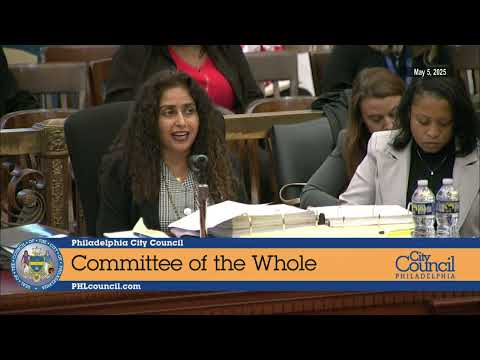
Interim DBHIDS Commissioner Dr. Marquita Williams told City Council the department expanded crisis-call capacity and mobile crisis teams, cited data on 988/911 warm transfers and said a new urgent-care center handled 113 encounters in its first five months.
Philadelphia — The Department of Behavioral Health and Intellectual disAbility Services (DBHIDS) presented its fiscal year 2026 testimony to City Council on the department’s crisis-response expansion, provider network changes and homelessness outreach.
Interim Commissioner Dr. Marquita Williams said DBHIDS contracted four providers that together manage up to 29 adult community mobile crisis response teams operating 24 hours per day, seven days a week. She described an expanded Philadelphia call line (PCL) to support the 988 national lifeline: “PCL now handles about 6,000 calls per month,” Williams said, and noted the 988‑911 co‑location effort has increased warm transfers of behavioral-health calls from 911 to 988 by about 36 percent for the reported period.
Williams also said that between January 2023 and February 2025, the city recorded 4,288 transfers from 911 to 988. The department opened the city’s first adult behavioral-health urgent-care center at 3125 North Broad in September 2024; Williams said that in its first five months of operation the center conducted 113 service encounters, which the department says reduced the need for higher‑acuity interventions.
Homeless outreach and placements
DBHIDS told council its homeless-outreach team engaged more than 9,200 unique individuals living outdoors in FY24 and made 38,594 contacts; outreach work resulted in 2,464 unique individuals — about 23 percent — accepting housing placements and/or behavioral‑health treatment, Williams said.
Nut graf: DBHIDS emphasized crisis‑response capacity and community‑based services as priorities in the FY26 proposal while flagging workforce and funding pressures that could affect service continuity.
Workforce and funding concerns
Williams and Donna Bailey, CEO of Community Behavioral Health (the city’s Medicaid behavioral‑health managed‑care organization), both told council they are doing contingency planning for potential federal Medicaid and SAMHSA funding changes. Bailey described the potential scale of cuts and said the managed‑care organization is preparing to constrict its provider network strategically if federal funding is reduced.
Council follow-ups and data requests
Councilmembers asked for more detailed outcome data for mobile response dispatches, hospitalization and involuntary-commitment petitions. DBHIDS committed to provide additional data, and members pressed the department on workforce stability and pay rates for crisis-team staff, which several councilmembers said contribute to turnover and difficulty filling positions.
Ending: Williams said DBHIDS will continue coordination with providers and city partners and supply the committee with the requested operational and workforce data.