Get Full Government Meeting Transcripts, Videos, & Alerts Forever!
Get email alerts on the Workplace Rights And Courts topic
No spam. Unsubscribe anytime.
Juvenile Court employees raise retaliation, nepotism and record-keeping complaints; commissioners limited in action by legal constraints
Summary
Multiple current and former Juvenile Court employees told the commission they face retaliation and alleged nepotism and mismanagement. Commissioners said the panel’s capacity to intervene is limited because the matter overlaps with personnel, pending EOC proceedings and a separate elected official's authority.
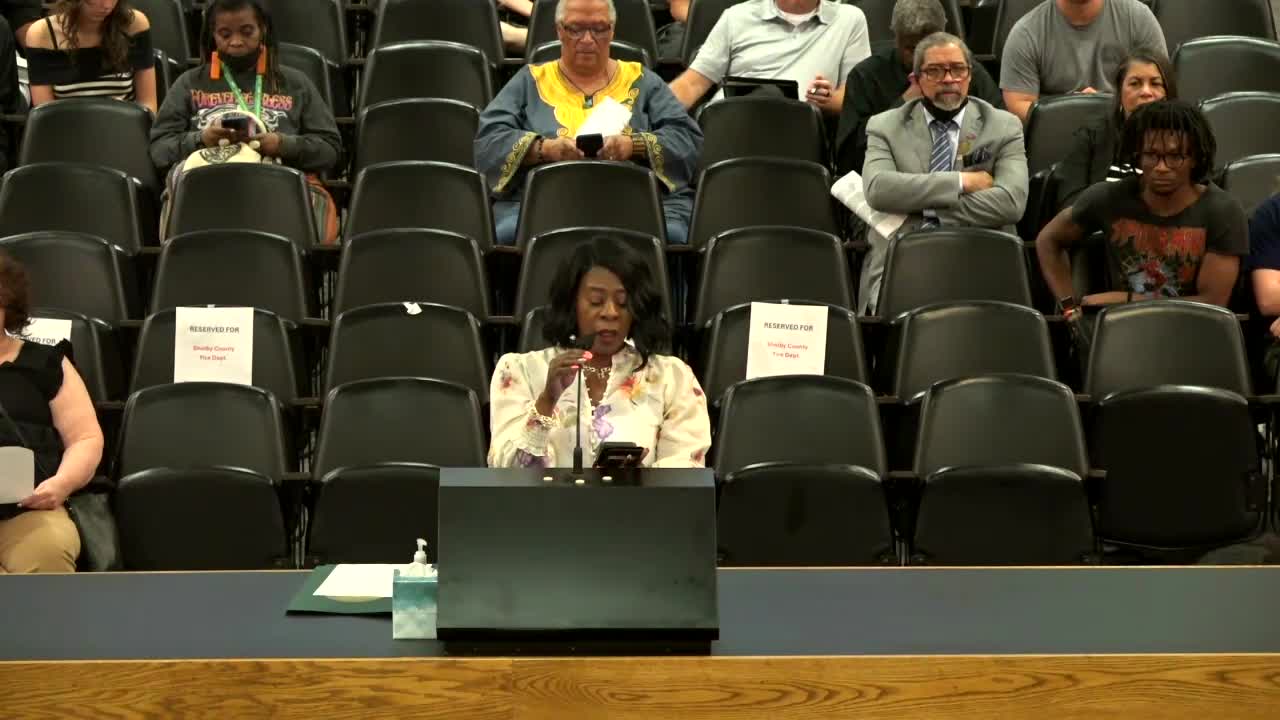
Several current and former Juvenile Court employees urged the Shelby County Board of Commissioners on Wednesday to investigate alleged retaliation, nepotism and other mismanagement at Juvenile Court.
Tamika Williams, a research specialist who said she had worked for the court since 2017, described a reclassification and restructuring that she said removed her position despite ongoing duties and alleged she was targeted after filing an administrative complaint. “This is a violation of TCA code 50-1-1304,” Williams told commissioners, referencing Tennessee’s Public Protection Act and saying she had received a right-to-sue letter.
Another employee, Patrice Minner, described alleged inappropriate relationships and favoritism, and said veteran staff had their jobs moved or degraded after speaking up.
Commissioners and county staff said their ability to intervene is limited. County Attorney’s Office staff advised that ongoing or pending litigation and the fact that juvenile court is a separate elected office limit the commission’s authority to act directly on personnel matters. Commissioner Clay Bibbs and others volunteered to arrange meetings between the complaining employees and the juvenile court judge’s office to clarify policy and next steps; the commission’s formal role would be policy review rather than direct personnel management.
Why it matters: The allegations involve workplace rights, potential retaliation under state law and the integrity of public services that impact youth. Commissioners said they would try to facilitate conversations and identify where commission-level policy changes (for example, on internal reporting or HR oversight) might be appropriate while acknowledging limits on direct intervention.
What’s next: Commissioners agreed to attempt to arrange meetings with the juvenile court’s administration and to consult further with the County Attorney’s Office about the commission’s policy levers; the County Attorney said the commission’s authority is limited when matters involve a separate elected official and pending legal claims.