Get Full Government Meeting Transcripts, Videos, & Alerts Forever!
Get email alerts on the State Legislation School Funding topic
No spam. Unsubscribe anytime.
Superintendent warns Senate Bill 66 would 'devastate' Fairfield Union school finances
Summary
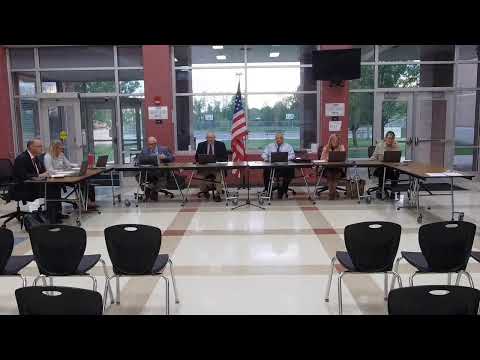
At the May 5 Fairfield Union Local School District board meeting, Superintendent Mister Bellville said Senate Bill 66 — which would change how the 20-mill floor is calculated by including local income tax revenue — could cost the district about $8 million annually and force more frequent levy requests of voters.
At the May 5 Fairfield Union Local School District board meeting, Superintendent Mister Bellville told the board that Senate Bill 66, a proposed state law that would include local income tax revenue in the calculation of the state's 20-mill floor for school funding, "would be devastating for schools." He said the district receives almost $8,000,000 a year from its local income tax — roughly the equivalent of 19 mills — and that the bill would require districts with income taxes to have that revenue counted against property-tax increases.
Bellville said he has contacted Senator Schaeffer's office to register the district's opposition and has spoken with other nearby superintendents; he said he believes Fairfield Union may be the only district in the county to have received a letter from the senator endorsing the bill. "I'm just telling you this piece of legislation would be devastating for schools. Not just impactful, devastating," he said.
The bill's change would, according to Bellville, reduce the district's ability to plan long-term levy strategies because increases in property-tax revenue would be offset by income-tax revenue in the new calculation. "We receive almost $8,000,000 a year from our income tax. And, essentially, what this does ... is that anytime you would receive an increase of property taxes, essentially, it bumps up against your income tax," Bellville said. He warned the recalculation could force districts to go to voters more frequently for operational levies rather than relying on existing long-term levy strategies.
Why it matters: Fairfield Union officials say the district relies on local income-tax revenue for recurring operations; changing the 20-mill calculation could materially reduce available funds and alter levy strategy and long-term financial planning. Bellville said the change would make budgeting more volatile for both the district and taxpayers.
Board members asked questions but did not propose formal board action on the bill at the meeting. Bellville asked that the matter be publicly noted so the community and other districts are aware of the pending legislation.