Get Full Government Meeting Transcripts, Videos, & Alerts Forever!
Get email alerts on the Housing Policy topic
No spam. Unsubscribe anytime.
Council seeks study of inclusionary zoning and other incentives as development lags; staff says a consultant study would take months
Summary
Councilors debated whether to lower Cambridge's 20% inclusionary zoning requirement to spur stalled housing projects. Staff said a comprehensive study of IZ and other incentives will likely take several months; some councilors pushed for a short-term 'stopgap' to allow projects in the pipeline to proceed.
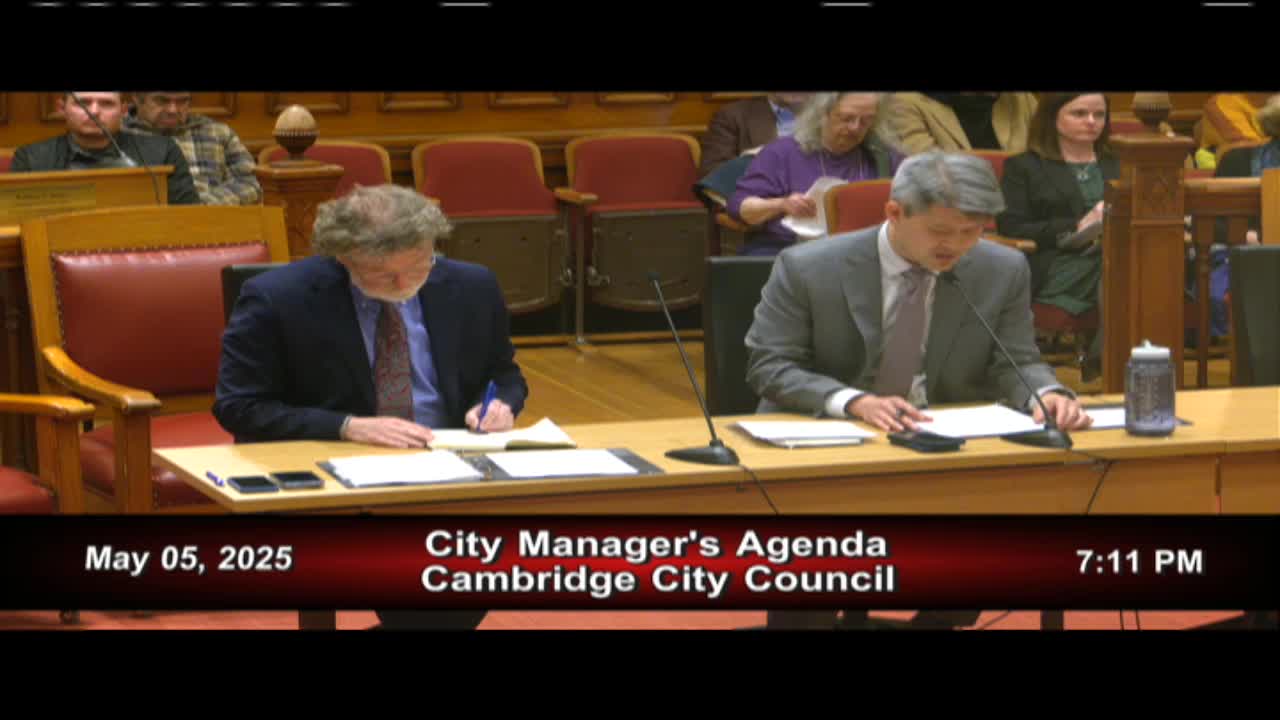
Councilors and members of the public used Monday's meeting to debate Cambridge's inclusionary zoning (IZ) rules after developers and residents warned that recent market conditions have made many projects financially infeasible under the 20% affordable set-aside.
Multiple public speakers and local developers said high interest rates, rising construction costs and tight financing are stalling projects, and asked the council to consider a lower IZ percentage or other incentives. "If we can't build anything, then there's no affordable housing either," said a developer who identified himself during public comment.
Councilors agreed on the need for a careful review but split on timing and approach. Some argued for an expedited study and a short-term, programmatic stopgap to allow projects already at advanced stages to proceed; others urged a formal consultant-led analysis to test how changes to IZ would affect affordable unit production across different project sizes and corridors.
Assistant City Manager / CDD staff said a thorough economic analysis of the IZ ordinance and alternative tools—tax abatements, expedited permitting, density bonuses, direct subsidies, and off-site options—would require consultant support and a timeline on the order of several months. "In talking with the housing director, we've been talking about 9 months to do the inclusionary housing study," one staffer said.
Councilors proposed competing motions. One asked staff to prepare a study and policy options by January 2026; another asked for quicker, interim recommendations to avoid losing projects in the pipeline. The debate closed without a final ordinance change; councilors asked staff to return with an accelerated plan for analysis and short-term options that could be considered during the FY26 budget process.
Ending: Councilors instructed the Community Development Department to prioritize an IZ study and to present a menu of short-term and longer-term options — including specifics on implementation timelines, fiscal impacts and legal considerations — for council review.