Get Full Government Meeting Transcripts, Videos, & Alerts Forever!
Get email alerts on the Housing And Homelessness topic
No spam. Unsubscribe anytime.
Public urging and council debate over funding for Transitional Wellness Center, Rise Up and municipal vouchers ends with council narrowing priority to vouchers
Summary
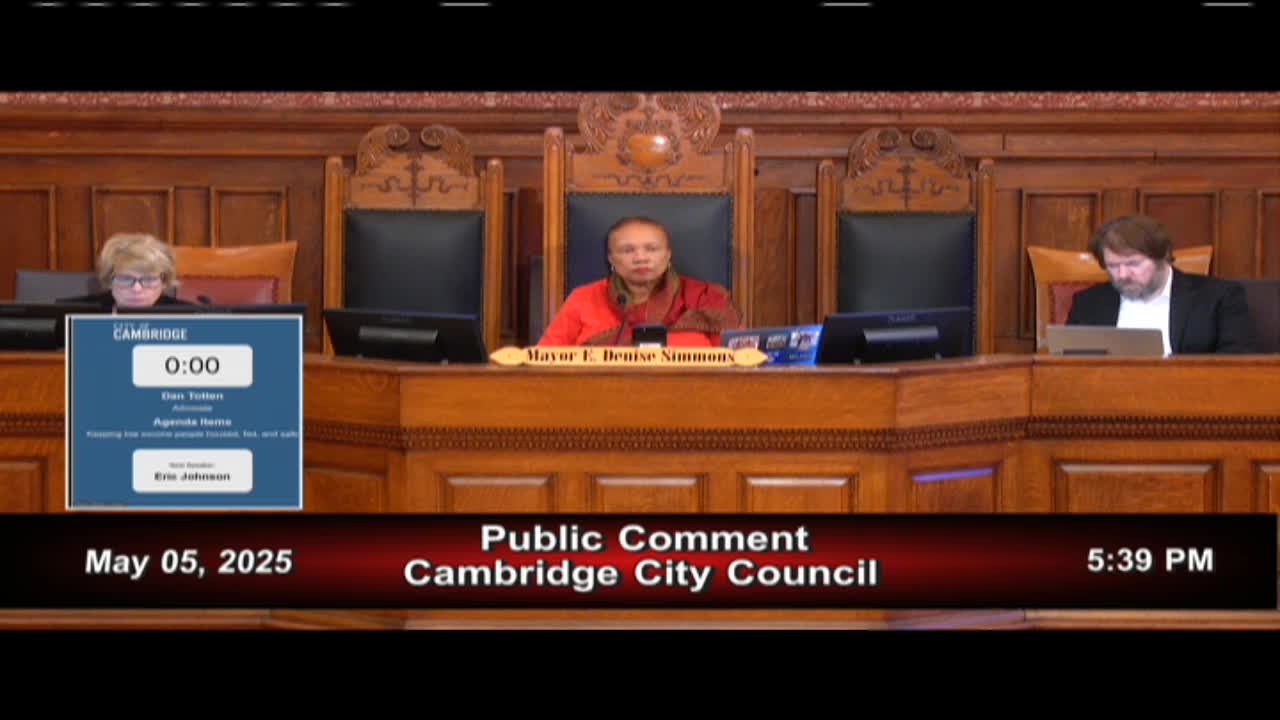
Dozens of residents, service providers and student organizers pressed the Cambridge City Council Monday to fund a suite of homelessness and housing programs slated for potential cuts in the manager’s draft budget.
Dozens of residents, service providers and student organizers pressed the Cambridge City Council during public comment Monday to fund a suite of homelessness and housing programs slated for potential cuts in the manager’s draft budget.
Speakers urged continued funding for the Transitional Wellness Center (the Spalding Center and related low-congregate shelter options), renewed support for Rise Up Cambridge and creation of municipal vouchers for hundreds of households they say face displacement. “We need to keep the transitional wellness center open, continue to fund the Rise Up program, and fund the municipal vouchers for the families that are unhoused or mixed status immigrant households,” Jacob Brown, a Magazine Street resident, said during public comment.
Many commenters framed the request as an emergency response to federal policy changes; speakers repeatedly noted the city’s $180 million in undesignated free cash and suggested small property-tax increases as a viable revenue source. “For most homeowners, this would be about $36 per million dollars of assessed value,” said Dan Totten, who identified himself as a supportive resident. Staff and advocates also noted program impacts across specific cohorts: about 42 mixed-status families, roughly 128 formerly unhoused households and about 170 vouchers for households at risk were cited repeatedly.
Councilors spent more than an hour debating how to respond. Advocates pushed for the city to preserve all three program elements; the city manager cautioned that some elements—Rise Up’s successor program, for example—had been scoped for a later budget year and that the administration needed time to define costs and implementation details.
After debate the council voted on an amendment by substitution offered by the mayor that narrowed the council’s immediate preference. The substitution directed the city to prioritize continued support for roughly 170 existing municipal and federal vouchers and people in permanent supportive housing while pausing formal commitments to scale up both a year-long successor to Rise Up and a full reopening of the Transitional Wellness Center pending further budget work. The substitution passed 5–4 (Azim, Nolan, Toner, Zuzi and Mayor Simmons in favor; Vice Mayor McGovern, Councilors Siddiqui, Sabrina Wheeler and Wilson opposed). Councilors then placed the city manager’s federal update on file and asked the administration for follow-up details and contingency plans.
What the vote means: Councilors who supported the substitution said their approach protected households at immediate risk of displacement while buying time to design successor programs. Advocates who opposed the substitution argued that this narrower approach still leaves vital programs unfunded and that the city possesses the resources—via free cash or a modest tax increase—to protect both the vouchers and the transitional and preventive supports simultaneously.
Ending: Councilors directed the manager to report back with cost estimates, contingency options and implementation details in follow-up memos; advocates said they will continue to press for full funding in the remainder of the budget process.