Get Full Government Meeting Transcripts, Videos, & Alerts Forever!
Get email alerts on the Transportation Safety topic
No spam. Unsubscribe anytime.
Flower Mound council adopts ordinance requiring helmets for children, safety rules for micro‑mobility and bicycles
Summary
The Town Council unanimously approved an ordinance requiring helmets for children under 14, lighting and reflectors for nighttime operation, and limits on handheld and hearing‑impairing devices for both micro‑mobility devices and bicycles, with a 30‑day grace period and a required safety course option for first offenses.
The Flower Mound Town Council on May 5 unanimously approved an ordinance that sets safety rules for micro‑mobility devices and bicycles, including a helmet requirement for children and restrictions on handheld and hearing‑impairing devices.
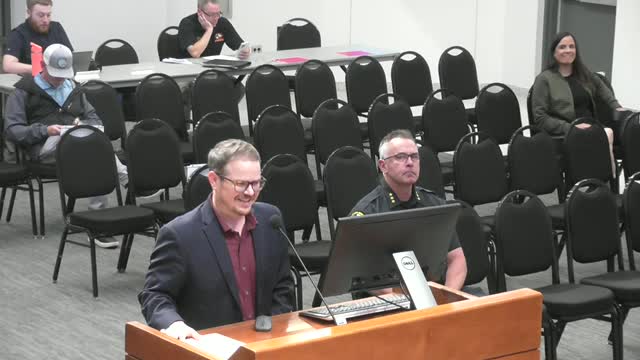
The ordinance makes it "unlawful for a child — and a child is defined as any person less than 14 years of age — to operate a micro mobility device or bicycle on a public way or on public property within the town unless that child is wearing a properly fitted helmet fastened securely," JP Walton, the town's chief strategic officer, told the council during the presentation. Walton said the rules also require lamps and rear reflectors for nighttime operation and prohibit use of handheld electronic devices and headphones that would prevent the operator from hearing approaching vehicles.
Council members discussed simplifying the ordinance language and the practicalities of enforcement and education. Walton described a first‑offense option that would allow a person to show proof of completion of a micro‑mobility safety course within 90 days and have the fine refunded. The ordinance includes a 30‑day delay before it takes full effect to allow residents time to obtain helmets and other equipment; Walton said the delay was timed to the end of school so families would have time to comply.
Councilmembers asked about dual‑ridership language, whether children should be restricted from riding on streets with higher speed limits, and how the proposed safety course would be delivered. Walton said the town intends to offer interactive courses similar to the bicycle safety course the town already provides and to seek opportunities to present proactively to schools if allowed by school schedules. He also said the court will give information about the safety course when someone pays a ticket.
The council voted unanimously to adopt the ordinance. The roll call on the ordinance showed five aye votes; no no votes, abstentions or recusals were recorded.
The ordinance references existing vehicle/safety equipment language and aligns the requirements for micro‑mobility devices with those for bicycles; Walton cited Transportation Code provisions for bicycle safety equipment during the presentation. Councilmembers and staff also said they will use the town's communication channels and required statutory postings to publicize the new rules during the 30‑day compliance period.