Lifetime Citizen Portal Access — AI Briefings, Alerts & Unlimited Follows
Dry‑land forests elevated as an emerging issue; several countries announce national afforestation and resilience initiatives
Loading...
Summary
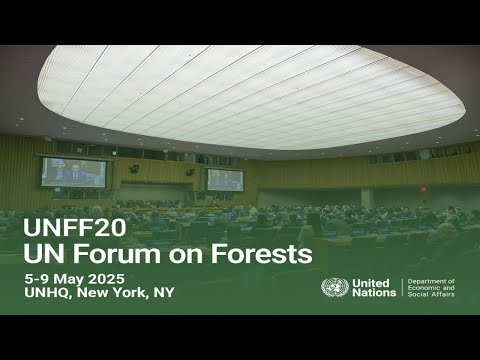
UNFF 20 added dry‑land forests to its emerging‑issues agenda and delegates from Saudi Arabia, Israel, Mongolia, Iran and others described national programs — from large tree‑planting campaigns to national strategies and wildfire response upgrades — aimed at protecting dry ecosystems and building resilience.
The UN Forum on Forests bureau recommended that dry‑land forests be discussed as an emerging issue, stressing their “essential role in combating desertification, preserving biodiversity, supporting livelihoods, and regulating local climates.”
Delegations used the technical session to highlight national programs targeting dry and semi‑arid forest systems. The representative of the Kingdom of Saudi Arabia described a broad national effort, saying the kingdom “has launched a Saudi Green Initiative in 2021, which aims to plant 10,000,000,000 plants or the equivalent of restoring 40,000,000 hectares of degraded land.”
Israel’s representative recounted a recent domestic wildfire and its implications for dry‑land management: “We have just met the harsh consequences of climate change when we faced massive wildfires last week in Central Israel.” Israel described a new national strategic plan developed with the Jewish National Fund that focuses on biodiversity preservation, wildfire prevention and public access.
Mongolia briefed the forum on its billion‑trees campaign, reporting that “as of today, over 85,000,000 trees have been planted across the country,” and described the initiative as integrating employment, education and technology, including satellite monitoring and AI for transparency.
The Islamic Republic of Iran stressed national reforestation targets and measures such as revised forest and rangeland law, a campaign that distributed more than 10,000,000 saplings, and the international recognition of the Hyrcanian (Huracan) Forest, noting that parts of it are on the UNESCO World Heritage List.
Many African and Mediterranean delegations, including Morocco, Algeria and the Republic of Congo, emphasized community participation, social‑economy approaches and new national strategies to increase forest cover, restore degraded lands and mobilize local economic benefits from sustainable forest management.
Delegations urged international cooperation on technical assistance, finance and capacity building tailored to dry‑land contexts. Several callouts targeted the need for early warning systems and investments in fire prevention, resilient planting materials, and locally appropriate governance to protect indigenous and smallholder livelihoods.
The forum scheduled a panel session on dry‑land forest ecosystems and invited further technical exchange across the week.